They adapted the unadaptable. Today Netflix is burning Macondo on a Wednesday.
Part 2's seven episodes dropped August 5. The nearly two-hour Grand Finale, directed by Laura Mora, lands worldwide today and closes the Buendía century. I have not watched the last hour yet.
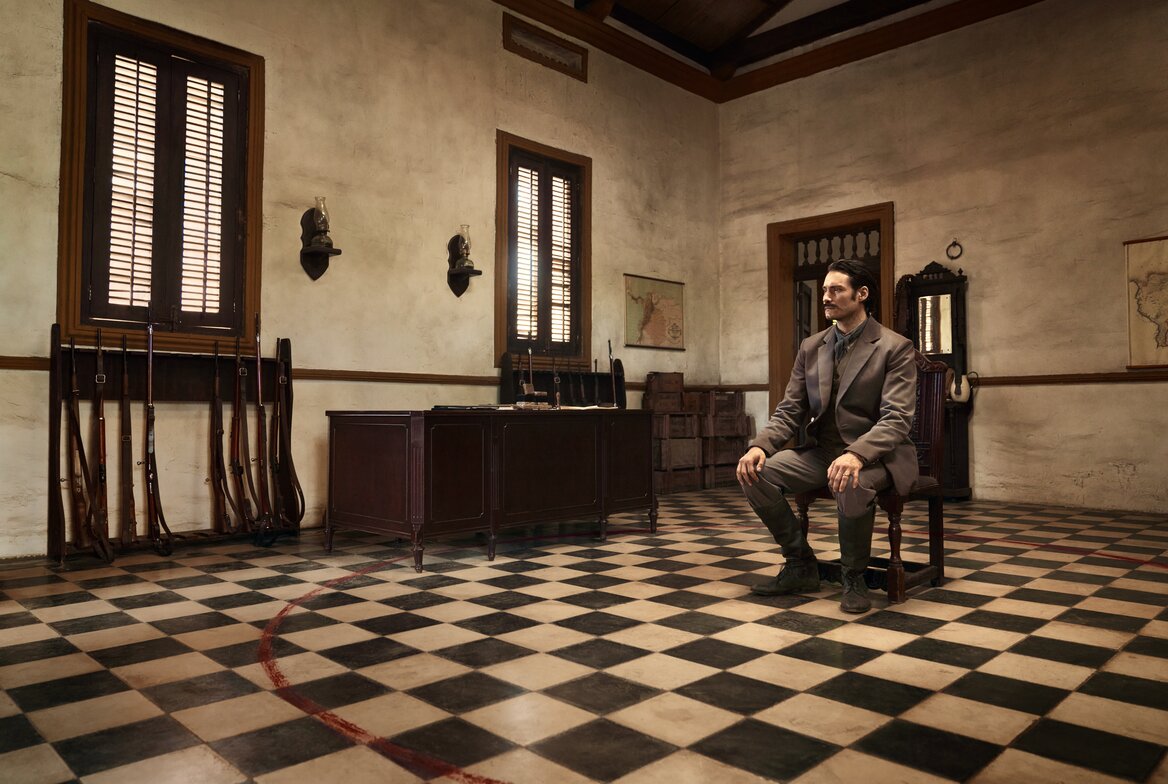
Today is Wednesday, August 26, 2026, and Netflix is ending One Hundred Years of Solitude. Not a season. Not a soft landing. The Grand Finale, a special episode held back from the seven that dropped on August 5, lands worldwide this morning like a feature film that somehow still has to live inside the same red app that also sells you a true-crime binge. They adapted the book people spent half a century calling unfilmable. Now they are burning Macondo on a streaming Wednesday. I am writing this before I press play on the last hour. That matters. This is a finales desk piece about the fact of an ending, not a plot dump dressed as authority.
Gabriel García Márquez published the novel in 1967. More than fifty million copies. More than forty languages. A century of the Buendía family in a town that never quite stays put in ordinary time. Magical realism that does not ask permission. Names that repeat until you feel cursed for remembering them. García Márquez, while he lived, refused to sell the film rights because he believed a movie could not hold the book. That refusal became dogma in every literature seminar and every Hollywood development meeting that wanted the prestige without the nerve. His sons, Rodrigo García and Gonzalo García Barcha, later trusted Netflix with the first authorized screen version. They executive produce. The production is Spanish-language, shot entirely in Colombia, made with Dynamo, and sold from day one as one of the most ambitious audiovisual projects Latin America has ever mounted. I believed the press release the first time I saw the Macondo backlot photos. I believe it more now that the town has to die on schedule.
Part 1 arrived December 11, 2024. Eight episodes. Directors Alex García López and Laura Mora splitting the founding of the utopia and the wars that start eating it. Critics did not treat it like homework. Rotten Tomatoes has the series around the mid-to-high eighties, with a consensus that basically says the adaptation is sumptuous and somehow still magical. Variety's Aramide Tinubu called Part 1 exquisitely detailed and one of the most faithful page-to-screen jobs in recent years, even while admitting the density can hurt. Collider said only television could carry the scope. In April 2025, at the Platino Awards in Madrid, the show took three: Best Ibero-American Miniseries or Television Series, Best Male Performance for Claudio Cataño as Colonel Aureliano Buendía, and Best Supporting Male Performance for Jairo Camargo. Colombia's India Catalina Awards piled on more hardware. That is not a vanity win for a streaming footnote. That is a Spanish-language literary adaptation winning the room that was built to measure it.
Part 2 did something stranger than a normal season drop. On August 5, Netflix released seven episodes. Episode titles that read like chapter headings from a novel that refuses to be cut into snacks: The Armistice. The Queen of Madagascar. Fernanda del Carpio. The Innocent Train Had Arrived. It was October 11. More than Three Thousand of Them. It Rained For Four Years, Eleven Months and Two Days. Laura Mora and Carlos Moreno split the slate. Mora took the bridge out of Part 1 and the banana-company pivot. Moreno took Fernanda's arrival and the rain. Then, instead of dumping the last chapter into the same binge pile, Netflix parked the ending for three weeks and called it a Grand Finale. Francisco Ramos, Netflix's Vice President of Content for Latin America, told the company's own newsroom that during writing and pre-production they decided the novel's close needed a format beyond a standard episode, practically a feature-length film directed by Mora. Variety reported the runtime as nearly two hours. Theatrical event screenings were lined up in select Colombian cities with Proimágenes. That is not how you treat a mid-tier prestige drama. That is how you treat a national text you are afraid to get wrong.
They did not schedule an ending. They scheduled a funeral for a town.
I like the arrogance of that choice. Streamers usually fear empty Wednesdays. They fill them with volume. Here the volume is the novel itself, and the calendar is doing literary criticism. Seven episodes earlier this month walked Macondo through progress, the railroad, the banana company, the wars that do not stay outside the house, and the family habit of repeating its own mistakes with new faces. Today's episode, per Netflix and the Colombian press that has been living with this production for years, is where the Buendía line and the town meet the fate readers have known since the last page of the book. I am not going to narrate that page as if I watched Mora's cut this morning. I have not. If you want the specific images of how the parchments, the last generations, and the town's end look on Netflix glass, watch the episode. What I can say from the public record is that the production reserved the ending on purpose, cast late-generation faces into the frame, and handed the close to the Colombian filmmaker who has been living in that house for years.
Deadline spoke to several of those late arrivals ahead of the drop. Margarita Rosa de Francisco, who plays Fernanda del Carpio in the later stretch, said it is intimidating to enter a work so many critics called impossible to film, and that the job was to find yourself inside it and trust the writers. Estefanía Piñeres, as Amaranta Úrsula, called the characters almost mythological, demigods you have to meet rather than invent. She described walking onto the set and seeing the Buendías gathered as ghosts, a surreal first day that sounds like the novel leaking into craft services. Sebastián Osorio plays Aureliano Babilonia. Emmanuel Restrepo, playing José Arcadio, put a number on the machine: about 1,500 people working, a scale he said he had never seen and hoped to see again. Those are not influencer quotes. Those are Colombian actors describing what it feels like when a sacred text becomes a payroll.
Laura Mora has been the public face of the ending. In Netflix's May announcement she said each episode of Part 2 is like a film, that they raised the aesthetic and narrative and sound so the close would feel grand, epic, and cinematic after three years inside that house and town. To Variety she described wanting the season deeper, more complex, more cinematic, and she admitted the project became a school for almost everyone, including herself, because a backlot on this scale was unknown to most of the Colombian industry. Francisco Ramos told Variety that Macondo itself becomes a character, utopia in Part 1, inevitable destruction in Part 2, and that García Márquez captured over a hundred years what ultimately happens to all utopias. That is the thesis I am willing to print without spoiling a frame of today's episode. Utopias rot. Families repeat. Solitude is not a mood. It is an inheritance.
The unfilmable argument was always a little dishonest, and I say that as someone who loves the book enough to be suspicious of cameras. What people meant was that a two-hour prestige movie would flatten the generations into a highlight reel and turn the magic into CGI dust. Television, at this length, with this money, in this language, on this soil, is a different bet. Production designers Eugenio Caballero and Bárbara Enríquez built multiple versions of Macondo so the town could age like a body. Costume, VFX, music, hundreds of artisans, departments across Magdalena, Boyacá, Cundinamarca, and Tolima. The novel's density is not a bug you solve with a voice-over. It is the texture you either fund or fake. Netflix funded it. That does not mean every choice is holy. It means the company finally spent like it believed Spanish-language literature could be a flagship instead of a subtitle track.
A sacred text that ends on a Wednesday is still a sacred text. The Wednesday is the insult and the point.
I keep circling the calendar because the calendar is the cultural argument. Literary endings used to be events you marked with a hardcover, a bookstore midnight, a packed theater, a national conversation that assumed you had to show up. Streaming taught us that endings are files. You open them when the kids are asleep. Netflix could have buried this finale inside the August 5 dump and called it generosity. Instead it carved out August 26, sold it as a Grand Finale, and asked the world to treat a Colombian novel's last movement like a premiere. That is either respect or marketing. On a good day it is both. On this desk I will take the respect, because Latin American television does not get many Wednesdays that feel like national appointments.
There is a risk in adapting a book this loved. Every reader already cast the Buendías in private. Every magical beat already had a temperature in somebody's head. Part 1's reception suggested enough of those private casts survived contact with the series. Part 2's early coverage, including praise from outlets that tracked the seven episodes as a visual and emotional escalation, suggests the back half did not collapse into prestige wallpaper. Micropsia and other review shops that have already seen the Grand Finale will argue about fidelity and tone in their own lanes. I am staying on my side of the spoiler line. The public fact is enough for a Wednesday brief: the adaptation that was not supposed to exist has reached the page everyone feared to film, and it is doing so as a standalone special rather than a residual chapter.
Claudio Cataño told Tudum that playing the Colonel was an honor and a risk, that Macondo's characters feel like blood, universal and specifically Colombian at once. Marleyda Soto's Úrsula has been the house's memory across the run. The later ensemble, Ángela Cano, Restrepo, Piñeres, María Adelaida Puerta, and the rest named in Netflix's materials, had to inherit a century without looking like cosplay. José Rivera, Natalia Santa, Camila Brugés, and María Camila Arias wrote Part 2. That writers' room is the quiet miracle. You do not get magical realism on screen by asking a North American room to "add wonder." You get it by letting Colombian and Latin American writers keep the book's logic intact while the directors build images that can hold a rain that lasts years and a town that remembers every sin.
I am not naive about Netflix. The same company will use this finale in a slide deck about global ambition and then ask you to autoplay something louder. That does not cancel what the production did in Colombia. Ramos told Variety that five or six years ago people in the Colombian industry thought a project like this was impossible, and that proving it possible creates a sense of intellectual ambition for the country. Believe him or tax him later. The backlot existed. The awards happened. The Spanish stayed Spanish. The family of the Nobel laureate stayed in the credits. For once the streamer's Latin American flagship is not a crime saga cosplaying as sociology. It is a novel.
What ending a sacred text on a streaming Wednesday means, practically, is that solitude now competes with the rest of the home screen. You can pause the Buendías for a snack. You can screenshot the rain. You can watch the Grand Finale on a phone on the subway and tell yourself you honored Gabo. That democratization is real and a little grotesque. The novel asked for attention measured in months. The app asks for a block of your afternoon. Mora and Moreno's answer, if the Part 2 episodes are any evidence, has been to make each hour feel complete enough that you cannot treat it like background. Ramos said each episode works as its own narrative while feeding the whole. That is the right defense against the Wednesday problem. If the finale is truly nearly two hours, it is trying to restore duration as a moral category.
I will watch it tonight. I will not pretend I already did. If the close is worthy, the conversation will be about whether images can carry a prophecy without explaining it to death. If it stumbles, the conversation will be about hubris, and the novel will survive either way. Books that outlive their authors also outlive their adaptations. What cannot be undone is the precedent. Somebody filmed Macondo in Colombia, in Spanish, at this scale, and finished the job. The unadaptable got adapted. The town that was a metaphor got GPS coordinates and a wrap party.
So here is the wire from the finales desk on August 26. Netflix premieres the last episode of One Hundred Years of Solitude today. Part 2's first seven chapters have been streaming since August 5. The Grand Finale, directed by Laura Mora, closes the Buendía century as a special. The novel's reputation as unfilmable is now a historical claim, not a warning label. I care less about whether every reader feels seen than about whether the industry remembers that ambition in Spanish is not a niche. Macondo was built. Macondo is ending. The app will move on by Thursday. The book will not. That imbalance is the whole story of literary television, and for one Wednesday, at least, the imbalance is the point.
Original commentary based on public reporting. Not a reprint.