
Evil Ryu is not a skin. It is the 1993 product.
The new Street Fighter trailer teases Satsui no Hado and a purple fireball. Theory: Paramount is not selling a tournament. It is selling Ryu's almost-fall in period dress.

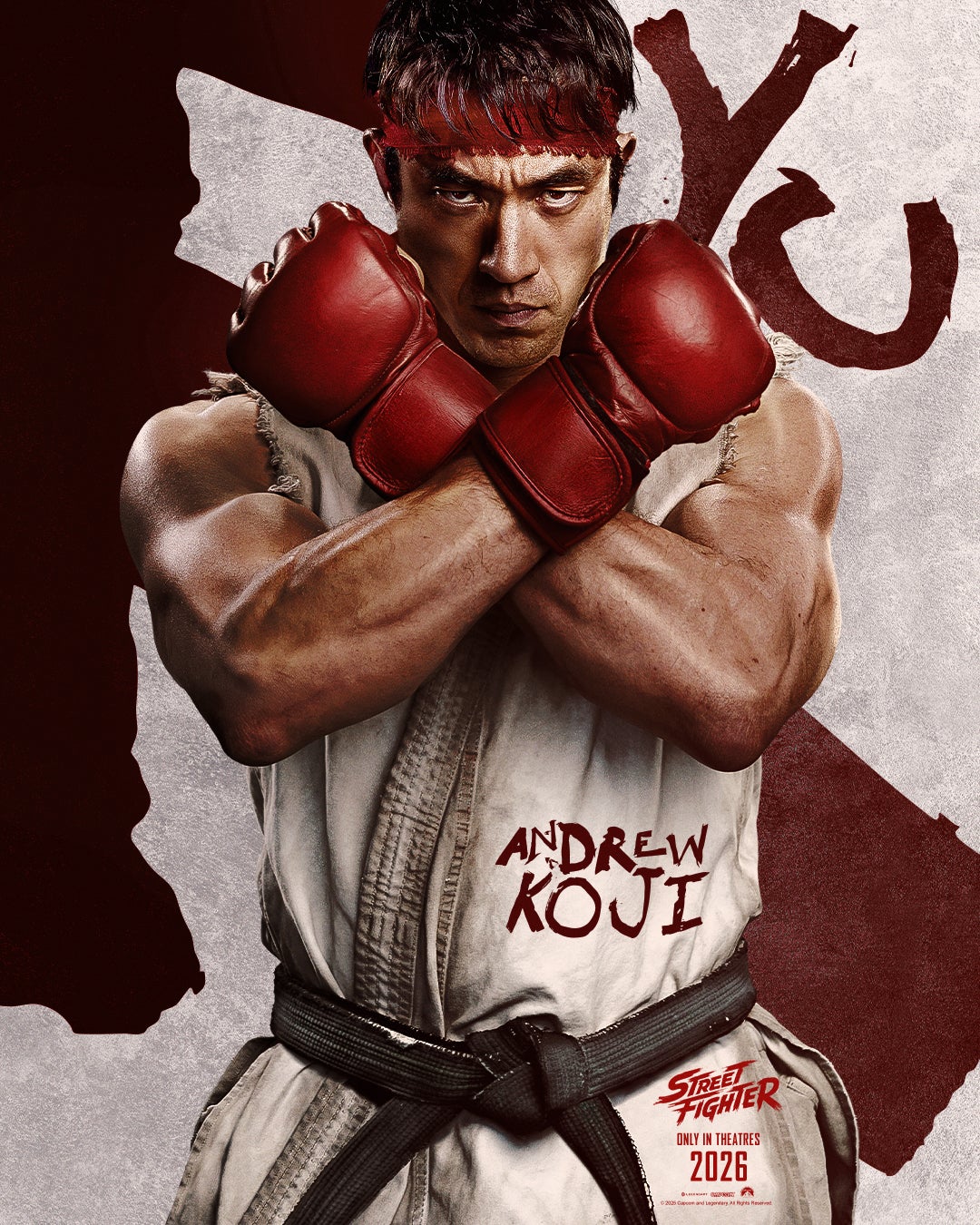
Thursday theory, labeled as theory. Paramount and Legendary spent the World Warrior Tour window in Tokyo shoving a new Street Fighter trailer into Shinjuku screens and then onto YouTube. ComingSoon and other outlets clocked the same beat on September 1 and 2: Andrew Koji's Ryu charging a purple fireball, talking about darkness growing inside him, fighting Callina Liang's Chun-Li while the Satsui no Hado hangs over the frame. Theatrical date remains October 16, 2026. I have not seen the finished movie. I am reading the trailer the way a shelf reader reads a box. The theory is simple. Evil Ryu is not a bonus skin for the third act. Evil Ryu is the 1993 SKU.
Set the carton facts first so the speculation stays honest. Kitao Sakurai directs. The film is set in 1993. Estranged fighters Ryu and Ken Masters, Koji and Noah Centineo, get pulled back when Chun-Li recruits them for the World Warrior Tournament. David Dastmalchian plays M. Bison. Joe Anoa'i plays Akuma. Cody Rhodes is Guile. Curtis Jackson is Balrog. Jason Momoa is Blanka. Wikipedia and the studio materials keep repeating that ensemble. Earlier this week I argued the Filmed for IMAX lease was the October screen SKU in the-imax-is-the-sku-now. Today's theory is about the character product inside those screens.
Evil Ryu is the SKU. The tournament is the aisle.
What the trailer actually shows, per ComingSoon's writeup, is Ryu struggling rather than completing a full heel turn in the marketing. Evil Ryu, in Capcom lore, is the version who has surrendered to the Satsui no Hado, the Surge of Murderous Intent. Akuma embraces that force. Ryu tries to keep a warrior code while the darkness grows. The purple fireball is not subtle branding. It is a color-coded promise to anyone who ever selected the dark palette in a console port. Ken, in the same trailer language, says he has spent years living in Ryu's shadow and wants to win the tournament. Chun-Li later tells Ryu that Ken is in danger. Bison hosts the tournament with a hidden plan. Those are premise rails, not a beat sheet I invent.
Why call Evil Ryu the product. Because video-game movies fail in two boring ways. They either treat the roster like a parade float, or they treat the lore like homework. Sakurai's trailer is doing a third move. It puts the most emotionally legible Capcom conflict on a human face in period dress. 1993 is not just nostalgia paint. 1993 is the year Street Fighter II was already a civic religion in arcades. Setting the movie there lets Ryu's almost-fall feel like a contemporary crisis instead of a modern reboot footnote. The darkness is not a multiverse gimmick. It is a man losing the argument with himself while the World Warrior brackets fill.
Akuma's presence sharpens the theory. Roman Reigns using Satsui while facing Alexander Volkanovski's Joe is spectacle. It is also a mirror. If Akuma is the finished product of murderous intent, Ryu is the unfinished purchase. Trailers love unfinished purchases. They let you fear a transformation without confirming the receipt. ComingSoon is careful to say the footage appears to tease the turn. I will stay equally careful. Theory is not spoiler. Theory is reading which icon the studio put in the window.
Ken's shadow line does double duty. On the surface it is rivalry candy. Under the theory it keeps Ryu's darkness from being a private psychological subplot. If Ken needs to beat Ryu to stop living in his shadow, then Ryu becoming something Ken cannot recognize is a friendship problem and a tournament problem at once. Chun-Li recruiting them for the next World Warrior Tournament, then warning that Ken is in danger, is the plot machine that forces Ryu to choose whether power or people win. Again, premise rails from public trailer coverage. Not a claim about the third-act cut.
1993 lets the darkness feel current. The arcade year becomes the character year.
Look at what else the trailer stacks. E. Honda in a bath house using Sumo Headbutt and Hundred Hand Slap before a Tatsumaki sends him flying. Guile trading sarcasm with Andrew Schulz's Dan Hibiki. Vega, Balrog, Cammy. That is roster comfort food. It keeps the Capcom aisle happy. It is also camouflage. Parade floats are loud. The quiet object in the window is Koji's face when the purple gathers. If the movie is only floats, October becomes another game adaptation that photographs well and evaporates. If the movie is Ryu's almost-fall with floats as pressure, October has a spine.
I also refuse a few lazy theories. I refuse to invent a casting swap. I refuse to claim Jason Momoa's Blanka is secretly the emotional core. I refuse to pretend Filmed for IMAX language guarantees a good Satsui sequence. I refuse to turn Dastmalchian's Bison into a confirmed political allegory without text. The trailer sold a conspiracy wrapped around a tournament. That is enough. The interesting SKU is still the man who might become the thing he trains against.
Compare this to prior live-action Street Fighter attempts without rewriting history into fanfiction. Audiences remember camp, Jean-Claude Van Damme, and a Chun-Li movie that never found a lane. Legendary's bet looks different in the materials: period setting, Capcom producer gravity via Takayuki Nakayama in the Tokyo event coverage, and a lead conflict pulled from fighting-game mythology rather than invented Hollywood daddy issues. Evil Ryu is pre-owned IP with built-in stakes. That is catnip for a studio that needs October to feel like an event without inventing a new mythology from scratch.
The playable Combo Challenge that launched beside the trailer is not the theory, but it is evidence of how hard Paramount is pushing participation. A rhythm-prompt trailer that scores your Hadoukens is marketing. The Evil Ryu tease is positioning. One asks you to play along. The other asks you to worry. Worry is the better ticket emotion for a 119-minute runtime Wikipedia currently lists. High scores fade. Fear that the hero might hollow out lasts through the credits if the film earns it.
There is also a casting-as-mythology angle worth naming without turning it into fan casting gossip. Koji arriving as Ryu after Warrior and a run of intense roles tells the audience the studio wants gravity in the white gi. Centineo as Ken tells the audience the studio wants sun and friction. Liang as Chun-Li, per the trailer language, is not a trophy cameo. She is the recruiter and the alarm bell. When the person who pulls you into the tournament is also the person who says your brother-in-arms is in danger, the plot stops being a bracket spreadsheet. It becomes a loyalty test with fireballs. That structure is why Evil Ryu can function as the SKU. The darkness threatens the loyalty test, not just the health bar.
Period detail matters more than cosplay checklists. A 1993 setting lets cassette-era textures, CRT glow, and pre-smartphone crowds do quiet worldbuilding while the special moves stay spectacular. It also lets Satsui feel like an underground rumor moving through dojos instead of a hashtag. Capcom's original surge of murderous intent always worked better as whispered doctrine than as a UI meter. If the movie treats it that way, the purple fireball becomes a symptom, not a power-up menu. Theory again. I am describing what the trailer is baiting, not grading footage I have not been handed.
I keep returning to the color because marketing departments do not pick wrong-colored Hadoukens by accident. Blue and white are comfort. Purple is the alarm. ComingSoon's description of Ryu talking about darkness while the ball charges is the ad copy version of a thesis statement. The thesis is not "watch famous people punch." The thesis is "watch a famous discipline crack." That is a better October pitch opposite whatever else is asking for giant screens. It is also riskier. If the crack never arrives, the purple was a lie. If the crack arrives as empty CGI without moral weight, the purple was a screensaver. The theory only pays if Sakurai lets the face do as much work as the effect.
So here is the Thursday theory, spoiler-light, stamped as theory. Street Fighter arrives October 16 as a 1993 World Warrior story. The trailer puts Satsui no Hado on Andrew Koji and colors the fireball wrong on purpose. Akuma shows the destination. Ryu shows the cliff edge. Ken and Chun-Li supply the reasons not to jump. The tournament is the aisle that gets you into the store. Evil Ryu is the product on the shelf. If Sakurai sticks the landing, October's arcade movie will not be remembered for how many special moves hit the IMAX glass. It will be remembered for whether Ryu stayed Ryu. I have not seen the answer. I have seen the box. The box is purple at the edges.
Buy the theory if you care about character architecture more than roster tourism. Ignore it if you only want Guile jokes and a sonic boom. Either way, the trailer already chose a center of gravity. It was not the bracket. It was the darkness growing. That is a product decision dressed as a myth. I am printing it as a theory while the Tokyo dust is still on the World Warrior Tour.
Original commentary based on public reporting. Not a reprint.