
Resonance is not Requiem 2. Asobo put a sword in Sophia's hand on purpose.
The prequel lands tomorrow on PS5, Xbox, and PC, day one on Game Pass. I have not finished it. The reviews landing today, the studio interviews, and two games of hiding already argue the case.

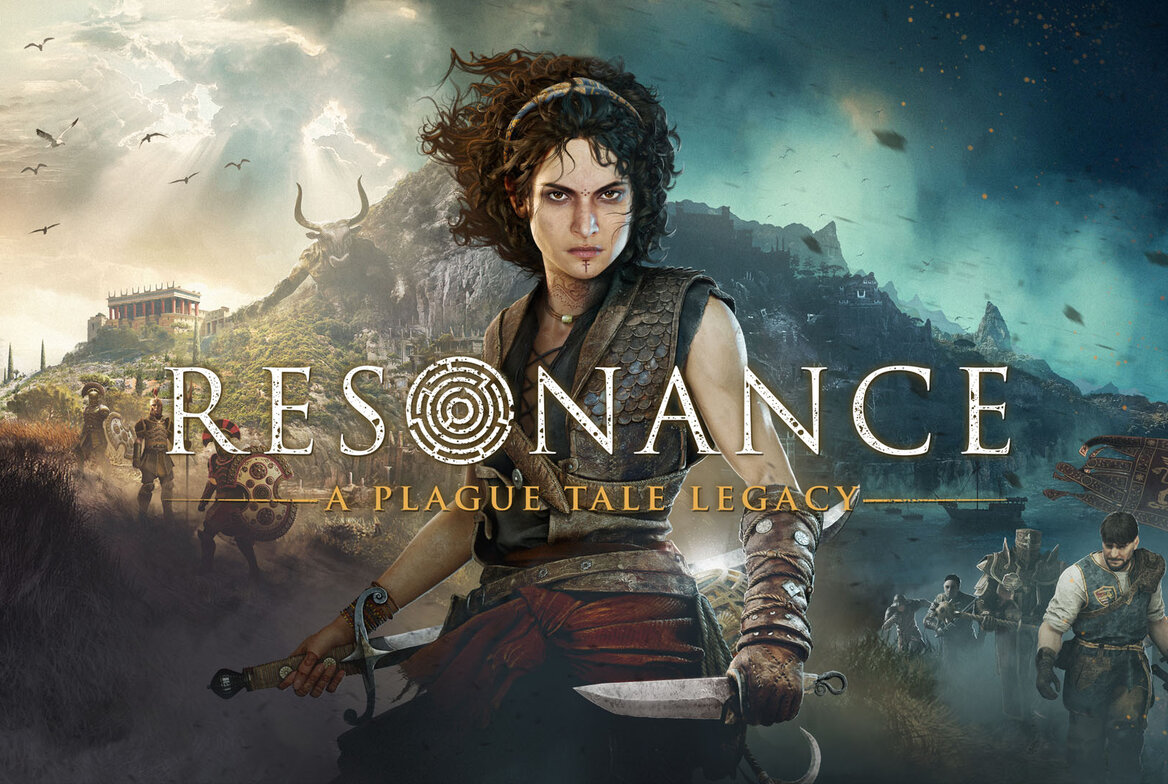
I have not finished Resonance: A Plague Tale Legacy. The game unlocks tomorrow, Thursday, August 27, on PlayStation 5, Xbox Series X|S, and PC through Steam and the Epic Games Store. It is $59.99 on consoles and $49.99 on PC. It is day one on Xbox Game Pass, and it supports Xbox Play Anywhere, which means a Game Pass copy is a console copy and a PC copy without a second receipt. Metacritic is still an empty column. OpenCritic has not posted an aggregate I can trust. Steam has no user sample. What I have is the public record. Giovanni Canistro at Gamesurf filed a 9 out of 10 this afternoon and titled the piece like a dare: Asobo risks it all with Sophia and wins. CGMagazine put a full PC review on the wire the same week and called the thing a triumphant spinoff that can still bore you with light puzzles. Martin Cid Magazine ran a hands-on on August 21 that opened with four words I have not been able to shake. IGN's Gabriel Moss and Eurogamer played preview builds in June. David Dedeine, Carol Ann Bañuls, Vincent Trinel, Anna Demetriou, and Marco Puricelli sat down with Xbox Wire last week and explained why this is not A Plague Tale 3. That is enough to review the argument the prequel is making. It is not enough to grade a labyrinth I have not walked. I am going to stay on that line.
The argument is not subtle. Sophia does not hide. Martin Cid put that sentence on the page as a fact, not a vibe, and every official brief Focus Entertainment and Xbox Wire have published this summer agrees. You play Sophia, the smuggler and plunderer who already walked through A Plague Tale: Requiem as the adult in the room, fifteen years before Amicia de Rune ever picked up a sling. She is on the Minotaur's Island, which is Crete wearing a myth, chasing a family secret that the Macula has been sitting on since Minoan time. She carries a sword in the right hand and a dagger in the left. She parries. She kicks. She yanks people off their feet with a grappling hook. She does not spend two games teaching you that a teenage girl with a rock is still a teenage girl with a rock. That was Amicia's job. Amicia finished it.
I played Innocence. I played Requiem. I will not invent an hour count for either, and I will not pretend a Resonance save file on my machine is complete. What I remember from those two games is a specific religion. Asobo Studio, a French house that used to make racing games and Microsoft Flight Simulator, built a stealth-survival fairy tale in plague France and then spent a sequel making the fairy tale worse on purpose. You hid in the grass. You managed light against rats. You loved a little brother whose blood could end a city. Requiem ended Hugo. Dedeine, Asobo's co-founder and the man on the Resonance interviews, told Xbox Wire that ending was real for everyone, so an actual A Plague Tale 3 was off the table. A game centered on Basilius, the old-world Macula figure in the backstory, would have felt like the sequel they refused to make. The team was in love with Sophia. She started as a sidekick and then refused to stay one. Her personality, Dedeine said, is much more active, and somehow more aggressive, than Amicia's. They wanted combat. She was already built for it. That is not a marketing pivot that got lucky. That is a studio reading its own character sheet.
Focus and Asobo have been unusually specific about the rest of the object. Resonance is an original story in the Plague Tale universe, not a costume change. Sophia grew up inside one of Venice's most feared gangs, according to the June Xbox Wire feature from senior producer Eric Chort and brand lead Naïla Bayou, and she learned to fight there before the island ever called her. The companions she tried to escape are never far behind. Leni is the friend who stays. A mythic hero drawn from the oldest legends is the ally she does not expect. The pre-order bait is the Heritage Pack: a Minoan Sword, Alec's Pendant, and a 30-plus-page in-game artbook. Olivier Derivière is back on the score, which is the sentence that should calm anyone who thinks a combat game cannot still sound like a funeral. The launch trailer premiered at Opening Night Live on August 25. Tomorrow is the street date, not a rumor.
A Plague Tale that wants to be seen is a different religion from the one that taught you to hide.
The setting does the rest of the arguing. Innocence and Requiem were France, rats, siege, and a road that kept getting smaller. Resonance leaves that road. Sophia sails for the Minotaur's Island because the place has been calling since childhood. Xbox Wire's store copy, the Focus site, and the Steam page all describe the same loop: a maze, an army chasing a treasure, a stolen Minoan sphere that bends light the way Daedalus supposedly wove it into the rock, a notebook, and a restless presence in the dark that knows your route. You shift between Sophia's medieval present and Minoan time. Two heroes, linked by fate and the Macula. Focus's June gameplay brief names the old-world half: Theseus. Sophia starts having flashbacks, then realizes the presence resonating in her is the legendary hero, more than two thousand years back. Through his eyes she fights trials the medieval girl is not yet built for. Eurogamer played a slice of chapter four where Sophia walks toward a ruined inner chamber with a huge Minotaur statue, then the game drops you into Theseus approaching the same room when it is packed, loud, and waiting for a gladiatorial kill. That is the dual-timeline pitch in one cut. I have not seen the payoff. I have seen enough of the architecture to know they are not kidding about the island.
Combat is the part of the brief that will start fights in comments, so I want the sourced version, not a vibe. Focus's June trailer writeup says Sophia chains parries and combos with dagger and sword, and that the grappling hook pulls enemies into hazards. IGN's Moss, in a two-chapter preview on June 23, was more mechanical than that. Sword on the right, dagger on the left. Tap to attack, hold for a critical that finishes with the dagger, kick to break a guard, dodge, tap the bumper to parry, hold it to block. The hook drags a body in and leaves it open. Color-coded tells on the big swings. The largest enemies cannot be parried, so you wait, slip behind them, and commit. Time-to-kill is short. Sophia folded after about three consecutive hits on Normal in the slice he played. Moss also saw a limit-break swing that throws golden particles, a Greek sword in a side tomb that changes the finisher, and about eight weapons across the campaign. Resonance Points unlock skills. Echo's Return lets you snatch an attacker on a parry and throw him through his friends. You can reset the tree for free. That is a systems document dressed as a preview. I am willing to repeat it because it came from hands on a controller, not from a key art caption.
Eurogamer called the same system a surprisingly competent first attempt from a studio that had never made this kind of melee game. The inspirations they heard in the room were Ghost of Tsushima, the Batman Arkham brawlers, and Marvel's Spider-Man. Gamesurf, writing from a finished review copy rather than a preview, adds Sekiro and Sifu to the list and says Asobo itself has cited those games. Light and heavy attacks, parries, dodges, counters, contextual executions, collisions that let you throw men into men. The French site is the most useful piece on the desk today because it is willing to hold two true things at once. The combat finally has weight. The more A Plague Tale becomes a traditional action game, the more it risks losing the thing that made it unrepeatable. That contradiction is the whole review. I am not adopting the 9. I am adopting the split.
Here is my position, stated before the aggregate exists, because waiting for a Metascore is how you end up reviewing a number instead of a decision. The stealth-to-swords shift is the correct call. Amicia's vulnerability was a completed thought. Requiem took a girl who should not have been in those rooms and kept putting her in worse ones until the only honest ending was the one that closed the bloodline's child. Making Sophia play that same tape would have been fan service with a different haircut. She was the fighter in Requiem. Resonance is the game that believes her. Dedeine told Xbox Wire they wanted the story lighter, then immediately said it is not a happy story, because that is who Asobo is. The universe called them back. The formula still changed. Action and combat being present, he said, impacted the story, the level design, the cinematics, and the chatter. Basically everything. When a director tells you the combat rewrite touched the chatter, believe him. The religion changed.
That does not mean stealth is dead, no matter how clean Martin Cid's lede sounds. Gamesurf is blunt: it would be a mistake to think Asobo abandoned caution. Darker sections still want observation. A supernatural enemy in the island's depths forces Sophia to hide and use light as protection. The principle is familiar. The atmosphere is not. You are not looking at the rat oceans that made Innocence and Requiem famous. You are being hunted by something that seems to know the route. Xbox's own product copy still says you cannot stop, only hide, outsmart, and push forward. IGN's demo saved its tensest sequence for a tunnel chase where slipping past the thing in the dark was better than fighting it. Eurogamer heard producer Eric Chort refuse to close the stealth door ("There will be something") and still came away calling Resonance primarily a combat game with no stealth in the hours they played. Those three weather reports can sit on the same desk. The creature is the old religion leaking through a new one. The human fights are the new religion on purpose.
Puzzles are where the day's reviews start to agree, and not always kindly. Sophia's Minoan sphere splits light, opens doors, raises platforms, and doubles as a flashlight. Moss compared it to Baldur's Gate 3's Astral Prism meeting Alan Wake's lamp, which is a nerd sentence I will allow because the device is doing that much work. Chort told Eurogamer that Uncharted and Tomb Raider were major inspirations for the tomb grammar, and that The Last of Us remains the emotional one. Gamesurf felt the derivation. Some puzzles stop the adventure and make you stand in a room until the room explains itself. That, the review says, becomes a leitmotif. CGMagazine's PC review is less romantic. The writer got tired of redirecting light, playing with mirrors, and arranging glyphs. Most puzzles are intuitive. Hints keep you from hard-locking. Frequency is the tax. If you do not like environmental puzzles inside an action game, this is a hard recommendation. That is a launch-week warning from someone who finished the thing, not a preview shrug. I have not hit that wall. I am not going to pretend I have. I am going to put it on the cart next to the 9.
Verticality is the other new grammar. Level designer Vincent Trinel told Xbox Wire that Amicia's maps were context-sensitive. White markers told you where to climb. Resonance defaults the other way. You can jump and climb almost anywhere, and the team's job is to restrict that freedom without making the island feel like a hallway. The grappling hook reaches about 10 meters. Chase sequences that used to be scripted in Requiem are now on you. Gamesurf says the hook is not just a combat toy. It is how Sophia enters a more vertical game, with side paths, relic chests, and resonance points that feed passive abilities. This is not an open world. It is Asobo learning the difference between a corridor and a ruin you can actually get lost in. I like that ambition. I also know what "get lost in" does to a 10 to 15 hour runtime, which is the window CGMagazine put on the PC review. That number is theirs. It is not mine.
What fans will recognize, if the people who made it are telling the truth, is not the sling. Character artist Marco Puricelli said the vistas still look like paintings, the fog is still thick, the volumetric lighting is still the studio's handwriting. Anna Demetriou, who voices Sophia, said the themes are still the beating heart even if the content changed shape. Grief, in different sizes. Lead writer Carol Ann Bañuls named the hard part out loud: respecting plague lore in a story that extends it, while the Macula takes a different form, while rats (the series' most famous special effect) are no longer the engine. That is the risk that actually matters. Anyone can bolt a parry onto a stealth game. Not anyone can move the Macula from a rat ocean to a Minoan curse and still have it feel like the same sickness. I have not seen the new form at full scale. Moss refused to spoil the monster and then said it is cut from the same cloth. Bañuls is the person I am listening to. She sounds like a writer who knows the mascot was doing narrative work, not just swarm work.
Sophia was already the fighter in Requiem. Making her hide would have been a costume.
Gamesurf's most useful cruelty is the last one. Resonance seems, in many respects, a better game than its predecessors. Combat is more dynamic. Exploration is more vertical. Environments seem richer. Sophia is a lead who actually fits action. And all of that might be the limitation. A Plague Tale was not just a pretty tragedy in the Middle Ages. It was recognizable. Amicia's fear, Hugo's blood, the sling, the rats, the shame of being seen, the feeling that the room was bigger than you. Resonance puts a lot of that in the background and becomes an excellent cinematic action-adventure that no longer looks so different from the other excellent cinematic action-adventures. The site still says yes, it is a Plague Tale, without too many problems, and that it is not trying to replicate Amicia and Hugo with different names. It is a new starting point. It might not be the Plague Tale fans expected. It might be the one the series needed. That is a grown-up review sentence. It is also a confession that uniqueness was one of the chips they put on the table.
I think they were right to put it there. Two games of the same formula would have made a third one feel like a greatest-hits tour through a grave. Dedeine said as much without using those words. The team needed a different duo, a different journey, a different mood. They kept the IP because they were in love with a sidekick. John Bert at Focus called Sophia a character already close to their heart since Requiem, which is publisher language for we noticed she was stealing scenes and decided to fund the theft. IGN, after two chapters, called Resonance plainly the best A Plague Tale has ever played, the rare third entry that reinvents instead of nudging. That quote is now on the Steam page, which is how you know marketing liked it. Eurogamer, after an hour in Paris on Focus's dime (they disclosed the trip), said the hallmarks are still there: supernatural tinge, emotion, cinematic flair, a person touched by a destiny walking into places no one has entered for thousands of years. Slightly brighter. Unmistakably still A Plague Tale. I trust the disclosure more than I trust the adjective. I also think "unmistakably" is doing a lot of work for a series that just retired its most unmistakable mechanic.
Limits I want on the page before Thursday's discourse decides this is either a betrayal or a masterpiece. I have not finished Resonance. I have not parried a Minoan enemy into a medieval one. I have not lived with the puzzle frequency long enough to know if CGMagazine's impatience is a taste or a design flaw. I have not confirmed whether Eurogamer's "no stealth" hour or Gamesurf's "stealth is not dead" review is the truer map of the full island. Metacritic has no aggregate. OpenCritic has no score I can cite. Steam has no users. The 9 from Gamesurf is one Italian outlet with a finished copy and a clear head. It is not a consensus. Invincible mode exists, per IGN, for people who came from the stealth games and do not want the melee to be the whole conversation. That is humane. It is also an admission that the new religion is optional if you pay for the game and then turn the sword off. Controller is recommended on PC. Keyboard and mouse are supported. I do not care which one you use. I care that the studio learned melee on this job, which Wikipedia, citing Rock Paper Shotgun, says out loud. Lead level designer Valérian Robert named Ghost of Tsushima, Sekiro, and Sifu, then said the first combat pass was too hard and had to be scaled back because the loyalists were coming from stealth. That is the most honest systems sentence in the file. They built a parry game for people whose last muscle memory was holding breath in a bush.
Recommendation, stated as a Wednesday verdict rather than a score. Load it tomorrow if you already liked Sophia in Requiem and you have been waiting for Asobo to stop apologizing for a fight. Load it on Game Pass if $59.99 for a new religion feels like a lot of money to spend before the aggregate exists. Skip it on day one if what you loved in Innocence was the shame of being seen, the sling, and the rats as a moral weather system, and you need those objects to remain the series. The prequel is not hiding that it spent them. Canistro says puzzles can break the rhythm. CGMagazine says the same in plainer English. Moss says two chapters were enough to put this on a 2026 calendar he did not expect a Plague Tale combat overhaul to reach. I am with the shift. I am not with a fake hour count. The wire does not require a lie about playtime. It requires a clear look at the object, and this object is a plunderer with two blades, an island that is also a myth, a Macula that changed shape, and a studio that decided Hugo's ending was an ending. For a Plague Tale in 2026, that is a coherent product. It is also a bet. Sophia does not hide. Tomorrow we find out whether the series still knows how to haunt you when the girl in the middle of the frame can swing back.
Original commentary based on public reporting. Not a reprint.