
Tom and Jerry became supporting players in their own logo. The compass points east.
Viva Kids opens Zhang Gang's Chinese co-production wide on Friday. The cat and mouse still sell the poster. The mythology sells the runtime. That is the kids-IP shipping container in 2026.

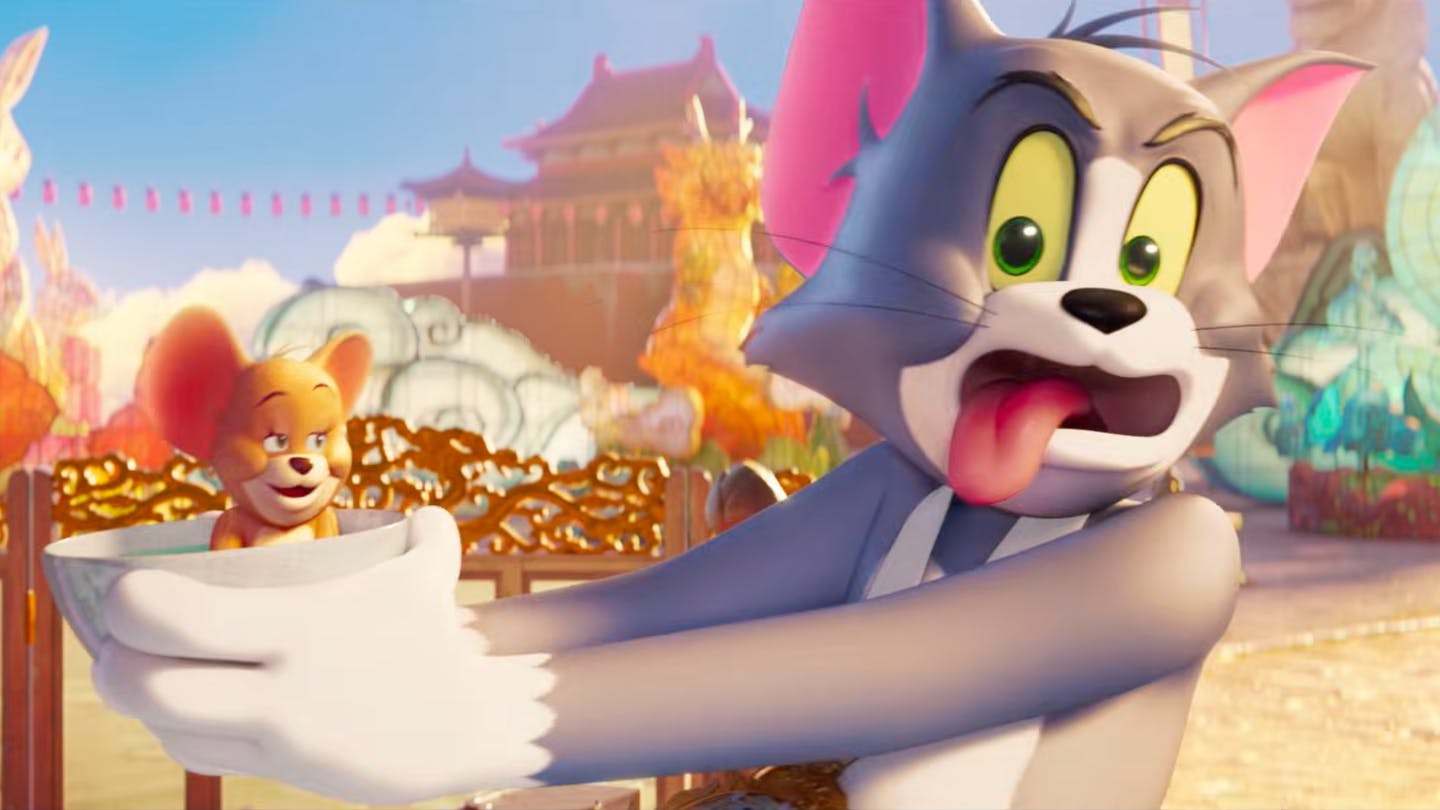
Today is Friday, September 4, 2026, and Viva Pictures just asked American multiplexes to treat Tom and Jerry like a tourism brochure with claws. Tom and Jerry: Forbidden Compass, the Zhang Gang-directed Chinese co-production that already played China in 2025, opens wide in the United States today after Viva Kids moved it up a week from September 9. I am writing this as Bart Christoff. This is a Features piece, not a grudging star rating. The feature is what happens when a seven-decade American chase gag becomes a Far East compass quest, and why that SKU says more about the global kids aisle than any single Tom scream.
Public facts, because the Features desk still washes the dishes. The film is also known in China as the star-compass romance title that local posters carried first. China Film Co. and partners produced. Wuzhou distributed domestically. The picture premiered on the festival circuit in 2025, opened nationwide in China on August 2, 2025, and sat in the Warner Bros. Discovery / Turner Entertainment IP orchard while Viva negotiated North American rights in April 2026. Runtime is about one hour forty-four minutes. Rating is PG for action and violence. The premise, per the US packaging, is simple enough for a box: during a museum chase, Tom and Jerry find a magical compass, get thrown through time, and have to cooperate to get home. Empire's review summary is blunter. Manhattan prologue, Gold City in the Far East, Mega Rat, Phoenix Master trying to earn his way back into heaven, compass around Tom's neck, relentless scored battles for most of the movie.
The cat and mouse did not move to China. The catalog did.
I care about this opening because it is the quietest kind of franchise event. Nobody is pretending Forbidden Compass is the new Spider-Verse. Nobody is selling IMAX as the theology. The feature is the industrial honesty. Hanna-Barbera shorts that once ran six or seven minutes of pure reciprocal violence are now a 3D feature-length co-production designed to travel, and the US release is a week-early Viva Kids slot opposite Paramount's historical crime bat and A24's desert siege and a Cars re-release Disney is using as comfort food. The multiplex on September 4 is a garage sale of American moods. Tom and Jerry is the imported aisle sticker.
Critics who already saw it in other territories did not throw a parade. Rotten Tomatoes sat ugly on a tiny sample. Metacritic's early tags were generally unfavorable. Empire called it a relentless mess, pretty environments, ugly Mega Rat, character designs that do not work in this 3D style, storytelling that stays loud for so long it makes you sleepy. The Guardian's Leslie Felperin gave it two stars and described a barrage of bright colors and noise aimed at the amygdala. The Irish Times said Tom and Jerry become supporting players in their own film, shoved aside for flimsily sketched newcomers. Mark Kermode compared the experience to being shouted at by a hyperactive child. The Spectator's cultural read called it a weirdly dissonant hybrid, philosophically Chinese in its enlightenment arc, and hoped Chinese audiences would buy what the writer could not. That is the public critical weather. I am not inventing a secret rave from a Tulsa preview.
I already filed a related take on the wire: They sold a twenty-year wait as a Friday sword.
So why feature it instead of dunking and moving on? Because the complaint is the artifact. When critics say Tom and Jerry are supporting players in a Tom and Jerry movie, they are describing the real product. The IP is the passport stamp. The local mythology is the runtime. Phoenix Master needs enlightenment. Mega Rat sinks temples. Friendship shrinks a king into a rodent. The compass never quite explains itself and maybe does not have to, because the movie is selling motion, dragons, fireworks, and a holiday feeling that might make a kid want to visit the landscapes. Empire literally wondered if tourism was the principal aim. That sentence should be taped to every co-production pitch deck in Burbank.
Supporting players in their own logo is the twenty-first century cartoon contract.
I have watched this contract eat other shelves. LEGO movies that become travelogues. Monster movies that become city postcards. Video game adaptations that become costume catalogs. The Features desk keeps a soft spot for dead hardware and a greedy eye for what still prints. Tom and Jerry printed for eighty-plus years on the promise that the gag was the point. No lessons. No heavens to earn. No compass MacGuffins. Just reciprocal cartoon physics. Forbidden Compass is what happens when that promise meets a financing stack that needs mythology, merchandise shapes, and a story that can be dubbed into every territory without relying on Yankee kitchen slapstick alone. The museum prologue is the handshake with Western memory. The Far East bulk is the invoice.
Viva moving the date up a week is its own little feature inside the feature. August 5 reports said the US date slid from September 9 to September 4. That is not a flex. That is a calendar opportunist smelling a soft Friday and a family counterprogramming lane next to adult R-rated blood. Cars is back in wide re-release the same day. The Sun Never Sets expands. The adult R-rated lanes take the grown-ups. Tom and Jerry takes the stroller traffic that does not care about Tomatometer samples of four. I am not romantic about that. I am describing the aisle. Features desk exists to say the aisle out loud.
There is a version of this piece that only sneers. Easy. Loud. Empty. Supporting-player cat. I live near that sneer. I also live near the greedy shelf instinct that notices China Film and Turner Entertainment sharing a bed, Viva Kids handling the American boarding pass, and a PG runtime long enough to justify popcorn prices. The 2022 live-actionish Tom and Jerry already proved Hollywood could misplace the short-form soul in a feature body. Forbidden Compass proves the misplacement can be transnational. That is not nothing. That is a map of where kids IP actually lives in 2026: everywhere, all at once, with the original duo demoted to brand mascots inside somebody else's enlightenment plot.
I keep a soft cross-reference in my head to how fall calendars keep using animation as counterprogramming furniture. Height is the franchise now was about a sequel machine that treats altitude like a SKU. Forbidden Compass treats longitude like a SKU. Different desks. Same industrial habit. Put the familiar logo on a new geography and ask Friday to sort it out.
Spend a minute with the museum prologue, because that is where the handshake happens. Tom is a security guard. Jerry sneaks. They ricochet through artifacts like a short that remembers 1940. Then the compass wakes up, the current hits, and the movie relocates its soul. That structure is the co-production thesis in miniature. Give the Western audience ninety seconds of brand memory. Spend the remaining hour plus teaching new gods, new rats, new enlightenment homework. Critics who wanted reciprocal cartoon violence for 104 minutes were asking for a different financing plan. The financing plan wanted Gold City.
I am not allergic to transnational cartoons. Some of the best kids movies of the last fifteen years were passports with jokes. The feature complaint is narrower. Tom and Jerry's original bargain was anti-plot. The more story you pour into them, the more they become mascots attending somebody else's parable. Forbidden Compass pours hard. Phoenix Master. Mega Rat. Heaven as a HR process. Friendship as a size-reduction spell. When The Spectator says the film is philosophically Chinese in spirit, that is not a slur. That is a helpful label for what the container is carrying. American logo. Chinese narrative gravity. Global kids aisle. The US release is just the last customs stamp.
Parents will ask the only question that matters in the lobby: will it hold a restless child for the runtime. Maybe. Bright colors and noise are a technology. Empire's boredom complaint is an adult critic's metabolism talking. A six-year-old has a different meter. Features desk is not here to babysit. Features desk is here to notice that studios now treat that meter as the primary design constraint, and treat the original short-form genius as optional seasoning. If your household still owns the old DVDs of pure chase logic, keep them. They are becoming historical documents faster than the IP lawyers want to admit.
One last shelf thought for the nerd wire. September 4's American screen is a collage of what "movie" means in late 2026. Adult historical violence. Another desert genre night. Comfort Pixar re-release. Imported cat and mouse with a compass. The collage is the culture. Forbidden Compass is not the best film in that collage. It might not even be a good one by the early overseas grades. It is still the clearest shipping-label in the bunch: logo here, mythology there, release date wherever a distributor can find a soft Friday. I can respect the clarity even while I mourn the six-minute soul. That respect is the feature. The mourning is free.
So here is the Friday feature. Tom and Jerry: Forbidden Compass opens today in the United States as a Viva Kids wide release of a Chinese-made Warner orchard title that already lived a full life overseas. Critics who met it early called it loud, pretty, and narratively asleep. The interesting part is not the dunk. The interesting part is the demotion. The cat and mouse are still on the poster. They are not always driving the frame. That is the co-production future wearing whiskers. If your kid laughs, the container worked. If you leave hungry for a pure six-minute chase, you are remembering a country that does not fully own the shipping schedule anymore. I am filing that feeling under Features, because Reviews can argue stars. Features argue shelves. Today's shelf has a compass on it. The compass points east. The logo still says Tom and Jerry. Believe whichever half you need to get through the credits.
Original commentary based on public reporting. Not a reprint.