They sold a Mexican revolution as a love triangle. The doctor is the SKU.
Seven episodes drop today on Netflix. Mal de amores wears Lovesick as the English aisle sticker. Emilia wants medicine. The triangle is the packaging.

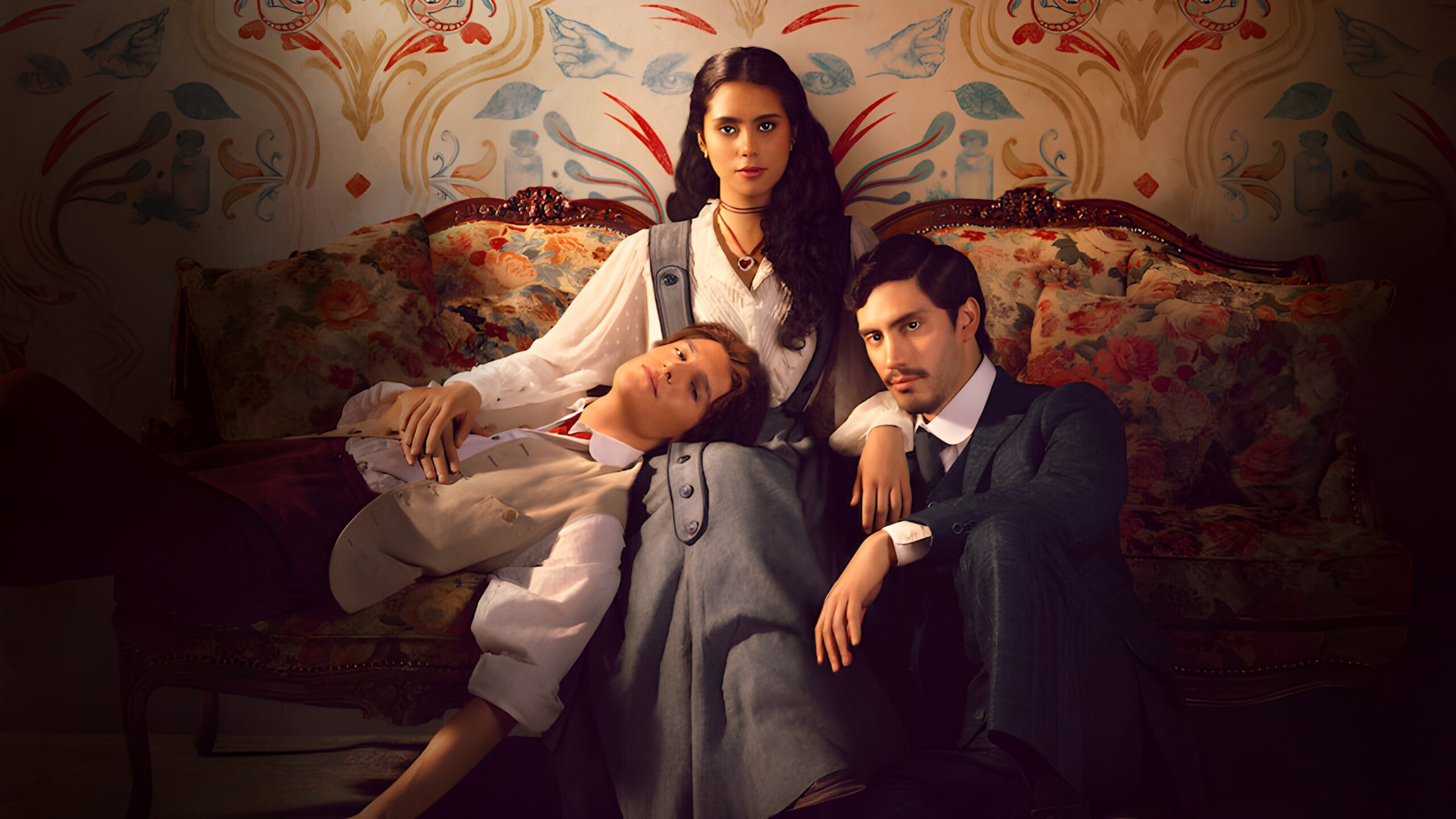
Today is Wednesday, September 2, 2026, and Netflix is dropping a seven-episode Mexican period drama into the global queue under two names at once. In Spanish the title is Mal de amores. In English the aisle sticker says Lovesick. I am not inventing a third. The Futon Critic trailer post from August 6 printed both, and Netflix's own title page keeps the English one for the international shelf. Renata Vaca plays Emilia Sauri. Juan Pablo Fuentes plays Daniel Cuenca. Ivan Amozurrutia plays Antonio Zavalza. Catalina Aguilar Mastretta wrote, produced, and directed the thing, adapting the 1996 novel by her mother, Angeles Mastretta, the one that won the Romulo Gallegos Prize and then sat on Mexico's cultural shelf for three decades waiting for a screen that was not a stranger's. That delay is not a romance beat. It is the industrial fact. The daughter kept the rights in the family. The streamer bought the family version.
I have not finished seven hours on premiere morning. I am reviewing the product Netflix is selling today, the paper of record in the trailer, the synopsis, the cast list, and the trade framing that keeps trying to hang an Outlander-shaped hole over a Mexican Revolution SKU. Collider's August 27 piece literally asked forget Outlander and then offered Lovesick as the next best replacement. That is shelf talker language. Outlander ended May 15, 2026, on Starz. Netflix smelled a vacated romance aisle and stocked a period piece with two men, one woman, and a country on fire. The honest take is meaner and better. The triangle is the packaging. The doctor is the SKU.
Netflix's own synopsis is the cleanest sentence on the box. Emilia faces the most difficult dilemma of her life: loving two men without giving up her dream of studying medicine. Daniel Cuenca, the adventurer and revolutionary who shaped her childhood dreams. Antonio Zavalza, the doctor seeking peace amidst war. They force her to choose between her feelings and her aspirations. That is the official dilemma. Martin Cid Magazine's September briefing on the series is sharper about what the novel actually argued. Both men represent paths available to Emilia. Neither path accounts for the third option: that Emilia study medicine herself, practice as a doctor herself, hold her professional claim alongside the romantic one rather than subordinate to it. The structural argument is that the third option is not a subplot. It is the story. I am printing that because it is the take the adaptation has to earn or betray. If the seven hours spend their oxygen on which man gets the kiss, the SKU failed. If they spend it on a woman who refuses the deal a transforming society keeps making to women, choose one or the other but not both, then the English title is a liar and the Spanish one is the real aisle.
They sold a Mexican revolution as a love triangle. The doctor is the SKU. The triangle is the packaging.
The calendar is not a mystery. Netflix already burned Macondo on a Wednesday in Burning Macondo on a Wednesday, restocked Song Kang as a piano romance in The SKU is the comeback, not the sonata, and today the desk is also burying a dog-named comedy in The dog was the series. All seven episodes land today, globally, on Netflix. No weekly drip. No midseason pause. That is the binge format Netflix still uses when it wants a prestige limited feel without calling the thing a limited series in every press line. What's on Netflix confirmed the September 2 date and the seven-episode count in late August, with the official trailer already circulating from the August 6 Futon Critic drop. The English trailer copy says based on the novel by Angeles Mastretta, a story of love, revolution, and choice. As the country awakens, so does Emilia Sauri, torn between two men and two ways of life. Within her heart, the most important revolution unfolds: that of a woman choosing for herself. September 2. Only on Netflix. That is marketing that knows exactly which shelf it wants. Love. Revolution. Choice. Woman. Self. You could print it on a period blouse.
Renata Vaca is the face the platform is facing out. What's on Netflix's cast brief lists her prior Netflix sci-fi Our Times, the action drama Pedal to Metal, La Reina Soy Yo as a younger Yameli Montoya, Saw X, Trust, and Apple TV's Midnight Family. That is not a debutante cast. That is a working Mexican and international resume the streamer can point at when it wants prestige without importing a Hollywood name to play a Mexican revolutionary-period doctor-in-training. Juan Pablo Fuentes arrives with Bandidos, Pact of Silence, Isla Brava. Ivan Amozurrutia arrives with The Manny, Fake Profile, Dark Desire, The Five Juanas. Supporting weight includes Humberto Zurita, Miguel Rodarte, Diana Bovio, Cassandra Ciangherotti, Juan Pablo Medina, Alejandro Puente, Sofia Carrera. Martin Cid calls Zurita and Rodarte the decades of Mexican film and television tradition that keep the period from turning into costume cosplay. I am not grading their performances this morning. I am noting that the cast list is not a romance-chemistry assembly line. It is a national industry call sheet wearing a love-triangle poster.
The novel's age matters more than the trailer admits. Mastretta published Mal de amores in 1996, three decades after the Revolution it depicts in memory and argument, and now the screen version arrives three decades after publication. That double delay is the product's weirdest virtue. The book was already looking backward. The series is looking backward at a book that was looking backward. Catalina Aguilar Mastretta adapting her mother's text is not a cute family credit. It is a chain of custody. El Universal's interview with Vaca about the medical language of the early twentieth century, the precarious health system during the Revolution, the difficulty of period speech, is the kind of actor note that tells you the production is sweating the profession, not just the bodice. Vaca says people will identify. Something lovely about the story is that even though it was written so long ago, it remains current. That is the actress selling relevance. My job is to ask whether the seven episodes treat medicine as vocation or as romantic obstacle number three.
Collider's Outlander framing is useful as a warning, not as a compliment. Outlander sold time travel, Jacobite politics, and a central pairing that the culture converted into a decade-long SKU. Lovesick has no stones, no travel, no Fraser tartan. It has the Mexican Revolution as pressure, not wallpaper, if the adaptation holds. Netflix's own language, as Collider quotes it, describes two revolutions: the evolution of the country and Emilia's own growth. As Mexico awakens on the brink of a revolution that will transform its spirit forever, Emilia learns that loving is also a form of resistance. That last clause is the dangerous one. Loving as resistance can be a serious political sentence. It can also be a perfume ad. The shelf will tell you which one Netflix bought. Look at the key art. Look at how much of the trailer is faces in soft light versus wards, fields, and committees. I watched the public trailer once for the desk. Faces. Horses. Kiss pressure. A country on the move. The medicine is there if you listen. The marketing prefers the fever.
Mal de amores sat on the cultural shelf for thirty years. The daughter kept the rights. The streamer bought the family version.
Metropoli Hoy's Mexican coverage is blunter about the risk. This is not supposed to be the typical period series that lives only on pretty dresses and intense looks. Desire, identity, personal ambition, and the historical chaos of the Revolution sit at the center, with Emilia as a woman who wants to love, study medicine, and decide for herself in a time when that was almost an act of rebellion. The same piece warns that a literary base, a strong female arc, and a recognizable cast also mean brutal scrutiny from episode one. Good. Scrutiny is the point of a review desk. I am not going to invent episode grades for hours I have not finished. I am going to say what the public materials already confess. The English title invites a romance binge. The Spanish title names a sickness of love. The logline puts medicine in the same sentence as two men. The daughter-director is the adaptation's first creative decision. The seven-episode dump is the format. Global today is the peg.
Industrial neighbors on the September Netflix shelf matter because they reveal what kind of toy this is supposed to be. Tomorrow, September 3, The Gentlemen Season 2 arrives, a Guy Ritchie crime restock the wire already clocked. Later in the month the same platform stacks Monster: The Lizzie Borden Story and The Fixers on September 17. Lovesick is not that aisle. It is the prestige romance-period endcap Netflix uses when it wants Latin American literary capital in the same login as the crime toys. I respect the endcap. I do not confuse it with the warehouse. The warehouse question is whether Emilia's medical claim survives the edit. If Daniel and Antonio eat the runtime, you bought a triangle with revolutionary wallpaper. If Emilia's training, refusal, and practice eat the runtime, you bought a doctor who happens to be loved by two men who cannot contain her. Those are different products. Same ISBN on the novel. Different SKU on the streamer.
Practical notes for the living room, then I stop pretending a premiere-morning brief is a finished report card. Lovesick, also titled Mal de amores, is streaming on Netflix starting today, September 2, 2026. Seven episodes. All at once. Created, written, produced, and directed by Catalina Aguilar Mastretta, from Angeles Mastretta's novel. Starring Renata Vaca as Emilia Sauri, Juan Pablo Fuentes as Daniel Cuenca, Ivan Amozurrutia as Antonio Zavalza. Supporting names the trades keep printing: Zurita, Rodarte, Bovio, Ciangherotti, Medina, Puente, Carrera. Official dilemma: two men, one medical dream, a country in revolution. Official promise: a woman choosing for herself. I am greedy about shelves. I will take a literary Mexican period piece over another Anglo highland romance clone. I will also refuse to call it an Outlander replacement. It is not a replacement. It is a different country's argument about who gets to practice, who gets to love, and who gets erased when the poster only has room for a triangle. Watch for the wards. Watch for the clinics. Watch for the scenes where Emilia's ambition is not a romantic delay. If those scenes are load-bearing, the doctor is the SKU. If they are garnish, Netflix sold you a fever with better costumes. Either way, the drop is today. The title on your row may say Lovesick. The product either is or is not Mal de amores. Face the medicine out.
Original commentary based on public reporting. Not a reprint.