
The multiplex lobby is a high score now.
Street Fighter Combo Challenge is not just a clever ad. It is a trial run for turning trailers into rooms you stay inside. The arcade came back wearing YouTube.

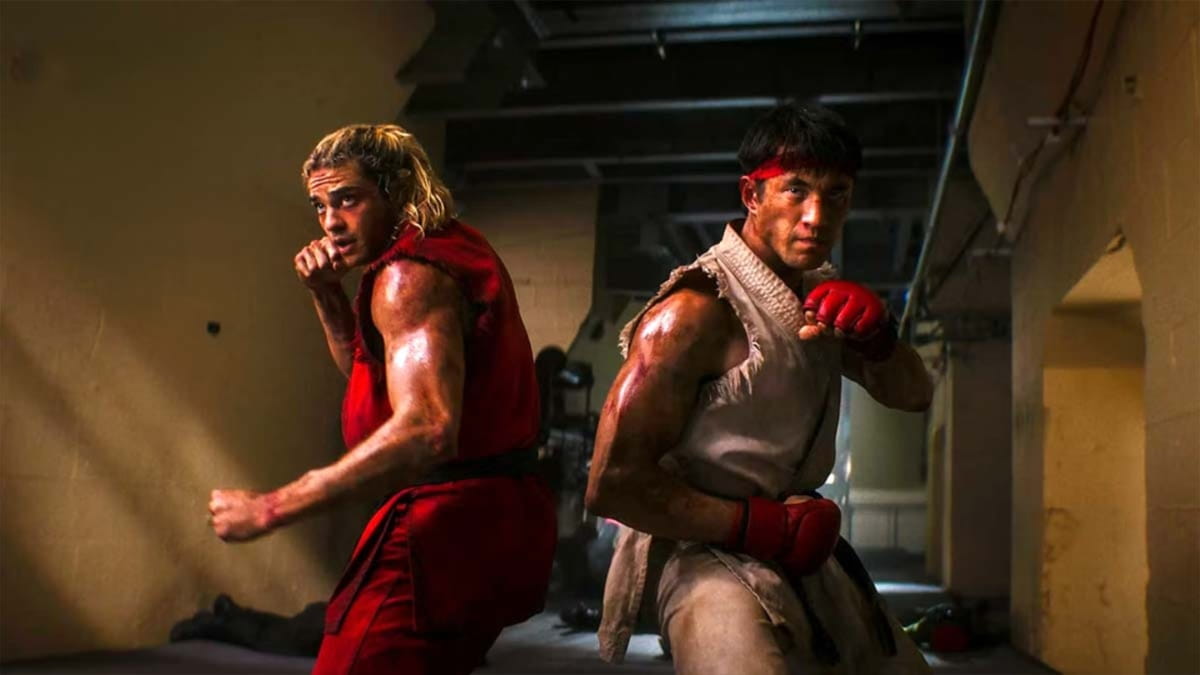
Features desk, Thursday, September 3, 2026. The Announcements wire already filed the product bulletin: Paramount and Legendary launched Street Fighter Combo Challenge on YouTube Playables and called it the first full-length movie trailer you can play. This page is the cultural argument underneath the bulletin. Playable trailers are auditioning to become the new multiplex lobby. Not the carpet. Not the popcorn smell. The place where you decide whether the movie is already in your body before you buy a seat.
Old lobbies were physical. Posters, standees, a cardboard cutout that blocked the bathroom line. Then lobbies became tabs. Trailers autoplayed in mute on the app. Then lobbies became two-second hooks designed to die inside Shorts. Tubefilter's September 2 piece is blunt about the attention problem Combo Challenge is solving. Social formats sped up scrolling. Long-form YouTube engagement, per the Metricool reporting Tubefilter cites, has been treated more like Shorts by restless thumbs. A trailer that demands constant inputs is a rude answer to rude habits. Miss a prompt and your score drops. The ad punishes distraction the way an arcade punished a kid who looked away from Ghosts.
The lobby used to be carpet. Now it is a combo counter.
Street Fighter is the perfect patient for this experiment because the IP already trained generations to stand in rooms and fail in public. Arcades were lobbies before multiplexes borrowed the word. You paid to lose with witnesses. Combo Challenge restages that humiliation inside YouTube. GamesRadar's comments section energy, paraphrased across posts about interactive trailers, is people joking that the trailer finally skips to the part where they lose. That joke is the feature. Failure is sticky. Polite trailers wash off. A bad score is a scar you might try to heal with another run, which is another complete view, which is the metric the studio wanted.
I am distinguishing this from the Announcements filing on purpose. That page is the ship date and the firstness claim. This page asks what happens if the ship works. If Paramount can turn a fighting-game movie trailer into a rhythm toy people finish, every franchise with a button vocabulary will want a cousin. Marvel will want gesture prompts on web-slings. Fast films will want nitro taps. Horror will want don't-blink meters. Some of those will be dreadful. The template will still spread, because the industry is desperate for any format that keeps eyes from flicking away at second twelve.
YouTube Playables is the boring hero of the story. A gaming hub inside a video site is not romantic. It is plumbing. Plumbing is how culture changes. Once the pipe exists, studios can pour different liquids through it. Street Fighter poured a full-length trailer. The next studio will pour a teaser. The one after that will pour a scene that only unlocks if you hit an S-rank. Tubefilter notes Atlas Arcade and Animated Subtitles experiments that recreate games inside YouTube with more technical friction. Combo Challenge is the mass-market cousin: low skill floor, Capcom flavors, score at the end. Mass market is how lobbies get replaced.
Think about what a lobby is for. It regulates appetite. It tells you what kind of night you are about to have. A cardboard Endgame standee said scale. A horror mirror vinyl said dread. A playable trailer says participation. You do not only watch Ken's Shoryuken. You time it. That changes the contract. The movie is no longer a show that starts at 7:10. The movie is a sport you already practiced incorrectly on your phone. When October 16 arrives, the IMAX glass will feel like the tournament cabinet you warmed up on in your apartment. That is either delightful or exhausting. Features desks exist to name both.
Practice the ad. Then pay for the match.
There is a class angle hiding in the joystick. Arcade culture was public and cheap per play, expensive by the evening. Streaming trailers were free and lonely. Combo Challenge is free and lonely and competitive with yourself. No quarter bucket. No stranger waiting for the machine. Just you, a prompt lane, and a number. That is a thinner social fabric than a 1991 mall. It is still thicker than a mute autoplay. Paramount cannot rebuild the mall. It can rebuild the feeling of having something to prove before the feature.
Tokyo's World Warrior Tour opener matters to the feature because pilgrimage and participation arrived in the same news cycle. Shinjuku screens for the faithful. Playables for everyone else. That split is the modern lobby design. Physical event for the base. Interactive object for the feed. The Announcements desk logged the cast on stage. The Features desk cares that the feed object is shaped like Capcom history. YouTube becomes the arcade the mall demolished.
Risks, because cheerleading is not a desk. Playable trailers can train audiences to expect agency the finished film will not give them. Street Fighter the movie is still a supervised ride. You cannot redirect Ryu mid-scene because your Combo Challenge rank was diamond. If the interactive preview overpromises control, the theatrical cut may feel like someone took the stick away. There is also fatigue. Not every title deserves prompts. When a prestige divorce drama arrives with QTE tears, we will know the template has gone feral. Street Fighter earns the experiment. Random dramas will steal it anyway.
Another risk is metric theater. High completion rates on a playable trailer are not ticket stubs. They are engaged advertising. Studios already confuse trailer views with demand. A high score culture could make that confusion worse if dashboards celebrate replays while CinemaScore later shrugs. The healthy read is modest. Combo Challenge is a better ad, not a crystal ball. Use it to lodge choreography in muscle memory. Do not use it to greenlight sequels.
Still, I like the honesty of the form for this particular IP. Street Fighter always asked your hands to care. A trailer that refuses passive viewing is on-brand in a way a melancholy piano teaser would not be. ComingSoon's move list inside the interactive layer, Hadouken through Hundred Hand Slap, is fan service and pedagogy at once. It teaches the movie's gesture language before the movie speaks in paragraphs. That is lobby work. That is also catalog work for a Capcom audience that has been burned by live-action before and needs a reason to trust October.
Connect the week. Fall 2 sells a body that cannot look down. Street Fighter sells hands that cannot look away. Both are about capturing a nervous system in a distracted decade. One needs a dark room and a plank. One needs a phone and a prompt. The multiplex still wins if the phone does its job, because the phone was always a funnel with better lighting. Playable trailers just make the funnel feel like a game you chose.
I already pointed readers at the IMAX lease argument in the-imax-is-the-sku-now. Premium screens are one SKU. Playable previews are becoming another. October's arcade movie is currently selling both. That double stack is the feature. Not because every movie should copy it. Because the ones that can copy it will, and the lobby will keep migrating into whatever format refuses to be skipped.
Watch how language shifts when a trailer becomes a challenge. People do not say they saw it. They say they ran it. They post ranks. They argue about whether the prompt lane during the Ryu versus Ken alley fight is fair. That vocabulary is closer to fighting-game community habits than to film Twitter recap culture. If Paramount is lucky, those communities overlap hard enough to drag offline friends to IMAX. If Paramount is only medium lucky, the communities stay online and the movie becomes a very expensive leaderboard skin. Features desks live in that medium-luck zone and still find the experiment worth documenting.
There is history under the gimmick. Street Fighter already colonized YouTube through match videos, combo guides, and the Assassin's Fist web series Tubefilter nods to as franchise canon adjacent. The playable trailer is less a foreign invasion than a studio finally speaking the platform's native tongue. Capcom fans taught YouTube how to watch hands. Paramount just graded the homework and stamped a theatrical date on it.
I keep thinking about the virtual arcade bezel GamesRadar describes, the trailer framed like a cabinet screen with a stick and buttons underneath. That visual is not cute decoration. It is a thesis shot for the whole campaign. The movie wants to be remembered as an arcade that learned speech. The playable layer makes the thesis literal for five minutes. Then the theatrical cut has to earn the metaphor without prompts. That handoff is the artistic risk. Marketing can build a lobby. Only the film can be the main floor.
For readers who want a practical stance: play Combo Challenge if you like the IP, then stop when the novelty plateaus. Save the money and the neck strain for October 16 if the choreography still interests you after the score screen. Treat the high score as a souvenir, not a personality. And if you are a studio executive reading this for ideas, steal the spirit, not the spam. Interactive trailers should feel like invitations. The second they feel like chores, the new lobby becomes another place people walk through without looking up.
So the Thursday feature, no fake data, no pretend playtest diary. Paramount put a full-length Street Fighter trailer inside YouTube Playables and dared a restless platform to hold still. The Announcements desk called the first. The Features desk calls the pattern. The multiplex lobby is a high score now. Fail it enough times and you might actually show up for the match.
Original commentary based on public reporting. Not a reprint.