
The sisters are the trauma loop. The Good Daughter sells processing, not twist stacking.
Peacock's The Good Daughter lands November 12 with Rose Byrne and Meghann Fahy as Southern sisters. Spoiler-light theory from the Vanity Fair first look: the show is selling how trauma returns, not only what happens next.

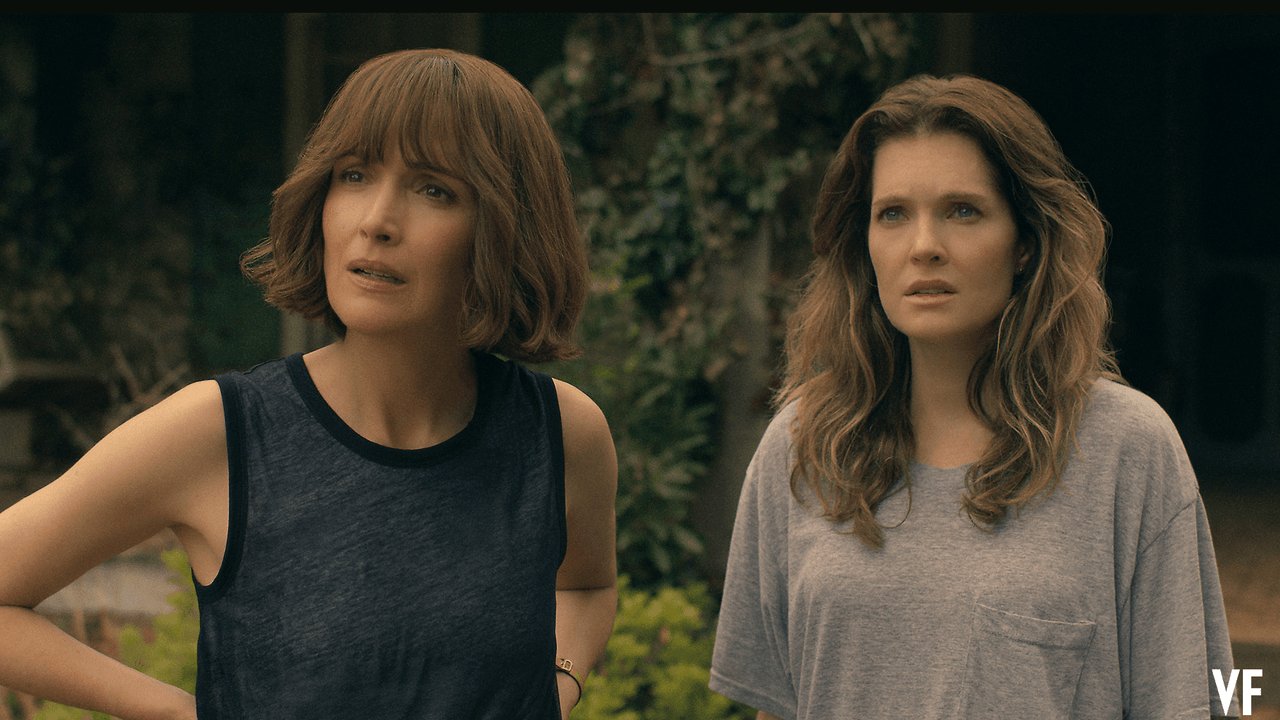
Some thrillers sell the next twist like a slot machine. The Good Daughter, at least on the public carton Vanity Fair opened this morning, is selling something meaner and more useful: what happens when a second violence forces you to finally feel the first. Peacock's six-episode Southern gothic debuts November 12 with Rose Byrne and Meghann Fahy as the Quinn sisters. Karin Slaughter's 2017 novel is the source wound. Steph Green directs. Brendan Gleeson plays the defense-attorney father. I am Miles Archer. Theories desk. Premise only. No episode maps. No ending guesses. The usable theory is already printed in the first-look interviews.
The theory, said clean. The show is not primarily a puzzle box about who did what in minute forty. The show is a trauma loop dressed as prestige crime. Childhood home invasion ends with the sisters' mother dead. Years later, another act of gun violence yanks the estranged adults back into the same family orbit at their father's insistence. Survivors often do not fully process the first event until a second one illuminates it. Green says that out loud to Vanity Fair. Fahy says the point is coming out the other side more connected. Byrne talks about darkness that can shut viewers out if the sister chemistry does not keep the door open. That is not gossip. That is the product thesis.
The second violence is not the plot twist. It is the key that opens the first wound.
Why sisters are the right machine for that thesis. Public materials cast Byrne's Samantha as the elder sister, a big-city patent lawyer who took the brunt of the childhood attack and still lives with traumatic brain injury that affects sight and walking. Fahy's Charlotte stayed closer to home as a defense attorney working with their father. Adult Sam carries disdain for Charlie's hometown choice. Adult Charlie carries the steel Byrne says is harder to crack. Estrangement is not a soap garnish here. Estrangement is how unprocessed trauma rearranges a family map until a new crisis collapses the distance. Spoiler-light theory: every argument about career and geography is also an argument about who was allowed to leave the original night behind.
Gleeson's Rusty sits in the loop as institutional fathering with a courtroom accent. Vanity Fair describes a bombastic Southern defense attorney who wanted to understand, at each juncture, why he made the choices he made as a father. That is a structural tell. In a sisters story about violence and aftermath, the parent who professionally narrates other people's worst days can become either the bridge or the blind spot. I will not invent which. I will say the public first look keeps putting fathering and lawyering in the same hallway, which is exactly where a trauma loop likes to live.
Power-loop reading elsewhere on Theories still sits in the deputy chair is the power loop.
Six episodes. Two sisters. One childhood night that never finished. Processing is the product.
Production ethics are part of the theory whether Theories desks admit it. The Vanity Fair piece notes work with Brady on gun-violence depiction and RAINN on assault scenes. Green describes refusing camera setups that spotlight the aggressor during verbal assault, choosing instead to stay with the person receiving the harm. Byrne prepared with a physical therapist who specializes in trauma. Those choices are not marketing fluff if the carton is honest. They are evidence the show wants victim-centered storytelling more than twist stacking. Spoiler-light theory: if those ethics hold across six hours, the finale will feel like reckoning rather than a magic answer key.
What I will not do. I will not invent the school-shooting plot mechanics beyond the public premise that another gun violence forces the reunion. I will not pretend I know who survives what. I will not launder first-look stills into a fake ending map. Theories desks that spoil for sport are just gossip with better fonts. The usable theory is the one you can hold until November 12: the sisters are the loop, the second crisis is the illuminator, and the show is betting that female-fronted crime audiences want catharsis through processing, not only through whodunit math.
Industrial context without conspiracy brain. Bruna Papandrea's Madeleine Films lane already trained a mainstream appetite for women-centered prestige crime. Slaughter adapting her own novel into six scripts is unusual authorship gravity. Jessica Biel was originally attached as Sam before Byrne landed the role after scheduling and strike weather. Fahy says Byrne's arrival lifted the sister chemistry. Byrne says Fahy's joy keeps a dark story watchable. Chemistry talk is usually press syrup. Here it is load-bearing, because the trauma loop only works if you want to stay in the room with both women after the opening punches hard.
Packaging grades for return cartons and appointment weather still apply in the Shards finale is season carton.
Format is part of the theory. Six episodes on Peacock is a finishable fever, not a twenty-hour hostage situation. Limited shape tells you the loop is here to close a novel adaptation, not to soft-reboot into endless casework. Closed objects are where Theories desks earn their keep. Closed objects also punish twist stacking, because there is nowhere to hide a hollow middle. If the middle hours only escalate violence without deepening sister literacy, the carton lied about catharsis. If the middle hours keep returning to how Sam and Charlie see the same night differently, the carton told the truth.
Practical watching advice without a spoiler board. Calendar November 12 if Byrne and Fahy in a Slaughter Southern gothic already sounds like your aisle. Recap nothing beyond the public premise: childhood home invasion, mother's murder, adult estrangement, second gun violence, father pulling them back. Mute the true-crime forums that will try to turn episode one into a spoiler marketplace. Keep Slaughter's stated hope in your head as a rubric, not a guarantee: women who have lived loss and violence getting up, brushing off, and continuing. Rubrics are allowed before air. Verdicts are not.
Compare to other trauma-adjacent prestige without stealing Reviews desks. Some shows sell trauma as aesthetic fog. Some sell it as a twist engine. The Good Daughter's first-look language sells it as unfinished business that another crisis finally makes visible. That is a harder sell and a clearer product. Harder sells are where theory filings belong.
Thursday theory tally. The Good Daughter, Peacock, November 12, six episodes, Byrne and Fahy as Quinn sisters, Gleeson as the father, Slaughter novel adapted by Slaughter, Green directing, Vanity Fair first look framing childhood invasion and later gun violence as linked wounds, spoiler-light read: the sisters are the trauma loop and processing is the product promise. Watch who gets to narrate the emergency. Watch whether the camera stays with harm's recipient. Let the hours argue with the theory instead of the other way around.
One more sentence for people who only buy calendars. November 12 is not another whodunit dump night on paper. November 12 is a dated six that wants you to sit with how violence echoes inside a family long after the crime blotter moves on. If that is your aisle, show up. If you only want twist velocity, this carton already warned you in the interviews. Theories prints the warning and the hope in the same paragraph, then waits for the episodes to choose.
Fahy’s closing note in the first look is almost too on-the-nose for a Theories desk, which is why it matters. She hopes viewers walk toward their trauma and process it, and that what they have gone through does not define them as broken. That is not a plot leak. That is the aisle card the cast is willing to hold in public. When a thriller’s own actors keep pointing at processing instead of puzzle pieces, believe the pointing. The sisters are the loop. The loop is the show. November can keep or break that promise. Today’s job is narrower: name the promise without inventing the turns.
Southern gothic as packaging weather also belongs here. Georgia locations, family law as inheritance, and a mother-shaped hole in the house are not set dressing for a generic streaming thriller. They are the climate the trauma loop needs so estrangement feels local instead of thematic. Local wounds are harder to shrug off between episodes. That is a feature for a six-hour carton that wants you changed by the end, not merely surprised.
Byrne's physical preparation is another structural tell Theories can use without spoiling frames. Public coverage says Samantha lives with lasting injury from the childhood attack, including assistance with sight and walking, and that Byrne worked with a trauma-focused physical therapist. When a prestige thriller builds disability and aftermath into the elder sister's daily life, the trauma loop is not only emotional metaphor. It is embodied continuity. Spoiler-light theory: scenes that treat Sam's body as inconvenience will feel like bad adaptation, while scenes that treat it as lived time will feel like the novel's point surviving the jump to Peacock.
Slaughter's own comments about school shootings becoming secondary plot because they are culturally ingrained are grim aisle weather, not a twist map. The first look keeps insisting the show wants to depict victims who do not simply walk away. That insistence strengthens the processing thesis. A thriller that centers aftermath has less room to treat violence as firework punctuation. If November's hours contradict that insistence, the interviews will look like costume ethics. If the hours match, the trauma loop theory holds.
Sister chemistry as load-bearing architecture also explains why casting churn matters to a theory filing. Biel exiting and Byrne entering could have been ordinary Hollywood weather. Instead the Vanity Fair piece frames Byrne and Fahy's rapport as the thing that keeps a dark opening watchable. Spoiler-light read: the show knows its first fifteen minutes are a tough watch on purpose, and it is betting sisterhood, not puzzle density, is why you stay. Theories desks should believe that bet until the episodes prove otherwise.
Peacock six-episode cartons live or die on whether episode three still feels necessary after the opening punch. Trauma-loop shows sometimes spend the middle inventing new shocks because they fear quiet processing looks slow. The usable warning for November: if The Good Daughter keeps manufacturing third and fourth crises instead of deepening how Sam and Charlie misread each other, the carton drifted into twist stacking after advertising the opposite. Hold that warning beside Fahy's hope language. Hope without structural follow-through is just a press day.
Original commentary based on public reporting. Not a reprint.