Dyson sold a camera as a toothbrush. The jet is the review.
The CameraJet launched at $499 with Gap Optical Targeting and an IFA hands-on wave. I am grading the public SKU, not inventing a dental study.

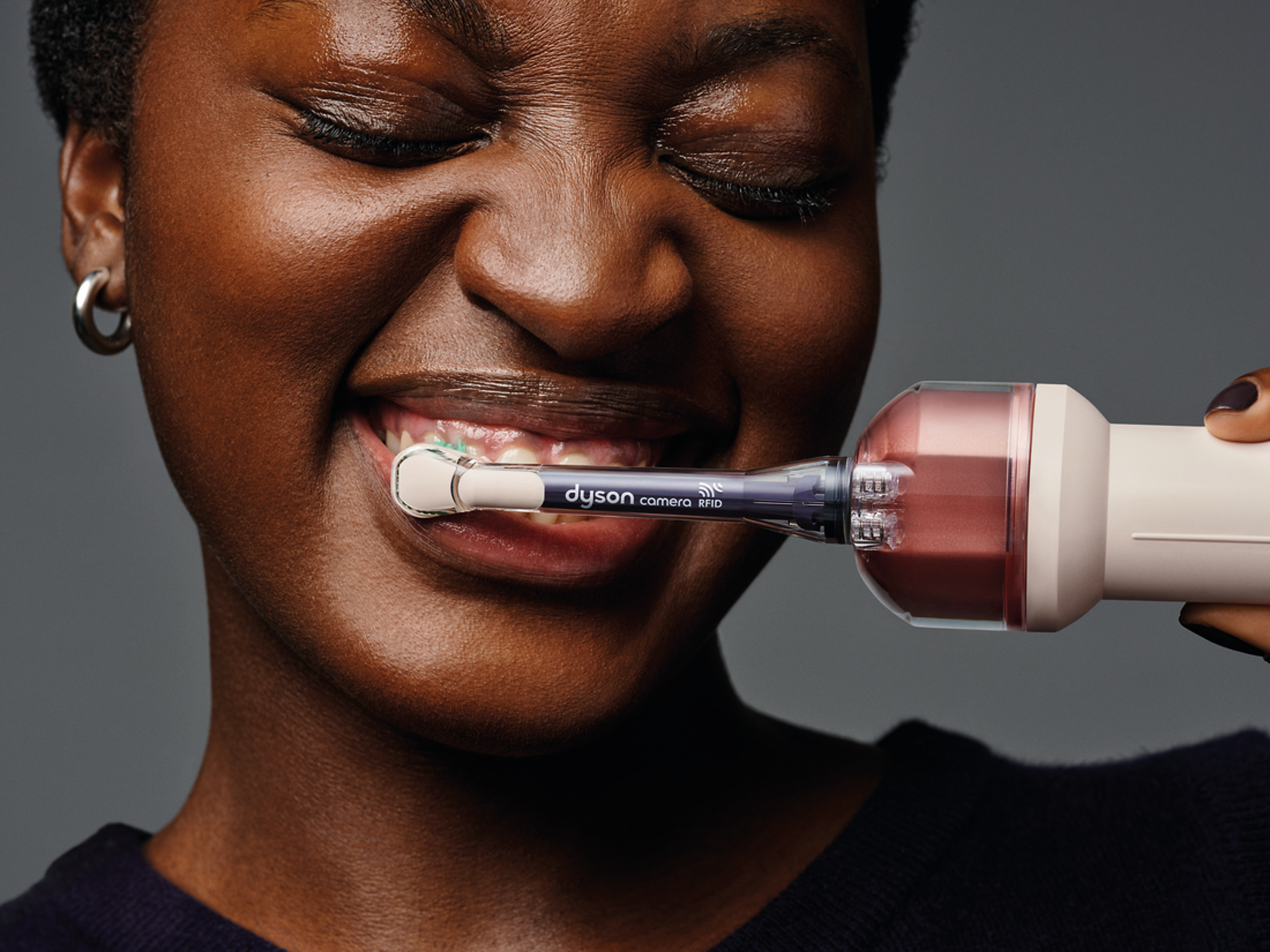
Saturday is a bathroom-mirror day on this desk. Dyson put the CameraJet on sale September 1 at $499 after a Paris unveil, then spent IFA week in Berlin letting journalists floss demo dentures while a 100,000-pixel macro camera hunted gaps at twenty-eight frames per second. Engadget's Mat Smith filed a September 4 hands-on from the show floor: Gap Optical Targeting, conical mouthrinse jets, a tiny 12.5ml anti-gravity tank, live view to the MyDyson app, Ceramic Ultra Blue and Ceramic Pink shells, and a minty blast to the eyes when he switched to manual jetting by mistake. Dyson's own PR Newswire carton claims six years of R&D, 16 million lines of code, a machine-learning stack trained on 470,000 dental images, and lab language about removing more plaque in hard-to-reach areas than market-leading premium brushes. I am grading the public SKU. I am not inventing a clinical trial I did not run. Per engadget.com.
What the product claims to be is not subtle. Brush and floss in one pass. Camera sees a gap. Jet fires mouthrinse within about 100 milliseconds. Dock refills the tank in three seconds and charges the handle. RFID brush heads track cleans and nag you to replace them. Non-foaming toothpaste and low-foaming rinse are coming as companion consumables because foam blinds the camera. Wi-Fi and Bluetooth for the app. No images stored on the device or in the cloud, per Dyson's privacy line. That is the carton. Reviews / Product Launches opens the carton against whether five hundred dollars of oral-care theater is a toothbrush or a subscription gateway with better plastics.
They sold a dentist's endoscope as a bathroom habit. The camera is the sermon. The jet is the product.
I am reading this the way this desk has to read a reveal week. There is no Metacritic for a conical jet. There is no OpenCritic for Gap Optical Targeting. The public facts are price, feature claims, hands-on first impressions, and a consumable roadmap. The Next Web noted the $499 ask sits about a hundred dollars above Philips Sonicare Prestige 9900 and Oral-B iO Series 10 street comparisons. Straits Times printed local Singapore pricing higher again, because regional cards always invent new ways to hurt. Engadget liked the flosser more than the brush ergonomics and called the live feed surprisingly clear for a medical-camera vibe. Those are the load-bearing bolts. Everything else is Ceramic Pink gradient.
Context Dorkify already keeps for premium appliance religion. When Sony sold Vice City as two DualSense shells I argued that eighty-five dollars can be a permission slip to hold a logo. The CameraJet is the same religion aimed at enamel. It asks you to pay a category jump now for a routine you already half-skip. When Sony turned nostalgia into an altar with drawers I argued that product launches can be furniture. Dyson is selling furniture for the sink, with a camera inside the idol.
Four hundred ninety-nine dollars is not a feature list. It is a bet that you will floss if a robot points the hose.
What the PR keeps circling as the actual SKU. Variable sonic oscillation marketed against bristle stall. Dual-bristle head contoured for gumline and stain lift. Sensitive head variant. Travel case in the box. Refill dock as the real desk sculpture. App coverage maps and guided cleans that will either become useful coaching or another ignored notification. Dyson says nine in ten people do not floss as regularly as they should, citing its own older usage study. That statistic is marketing and also probably your bathroom. Reviews can admit both.
Caveats I will not invent away. I have not brushed my own mouth with a CameraJet. I have not measured plaque proxies in a National University of Singapore collaboration lab. I have not confirmed how toothpaste foam, even SLS-free, behaves on a 100k-pixel sensor after thirty mornings. I will not invent a dentist endorsement, a long-term gum outcome, or a fake durability chart for RFID heads. Engadget already wondered aloud how the live feed survives real toothpaste. That question remains open on Saturday morning. If autumn owners say the tank is too small, the handle is too heavy, or the app is theater, this launch piece will look soft. That is fine. The honest job today is the public launch sheet, not a pretend peer review.
Recommendation, labeled as a desk reading the public machines. Preorder or buy if you already live in Dyson ecosystem religion, you hate flossing enough to pay for automation, and $499 is less scary than another dentist lecture. Buy the color that matches your sink cult and accept that Ceramic Pink is doing psychological work. Skip it if you already floss like an adult and you refuse to pay endoscope tax for a brush. Wait for third-party long-term reviews after people have used non-demo teeth for a month if camera fog and tank size are your whole personality. Do not buy it as a gift without asking, unless your friendship can survive a livestream of someone else's molars.
Compare the confession to the wider September board without stealing other desks' toys. Stern already sold a Vault door before a pinball price. Sony already sold Vice City plastic on a State of Play hangover. Dyson sold a camera toothbrush into an IFA week that also waved smart rings and translator buds. That is why it belongs on Reviews / Product Launches today. Not every launch needs a teardown. Some launches need a scarcity of dignity and a clear admission that the magic is a jet that only fires when it sees a gap.
Industrial weather around the drop. Consumables are the quiet boss fight. RFID heads create a replacement drumbeat. Proprietary paste and rinse create a second aisle. The $499 handle is the convert. The refills are the tithe. Reviews has seen this movie in printers, espresso machines, and robot vacuums. Dyson's version is simply aimed at a body part you cannot return to Amazon as easily after three years of enamel decisions. That does not make the CameraJet evil. It makes the CameraJet honest about how premium appliance companies eat.
One more shelf note for people who already own a Waterpik and a Sonicare. The CameraJet's bet is integration, not invention of brushing. Engadget said the flosser half felt like the advance and the brush half felt a little unwieldy. That split is the Reviews grade in miniature. If you need a better flosser that travels, the demo tank story is tempting. If you need a better brush, the category already has cheaper kings. Pay $499 only if the combination is the point. Combinations are allowed to be expensive. They are not allowed to pretend they are bargains.
Privacy language belongs in the grade because a toothbrush with Wi-Fi is a punchline waiting for a breach diary. Dyson says the camera is active only during live viewing or auto-jetting, and that images are not recorded or stored. That is a good sentence. It is also a sentence you should keep in a folder next to every other connected-home promise. Reviews prints the promise. Reviews does not notarize it. Buyers who flinch at sink cameras are not irrational. They are reading the decade correctly.
IFA context matters for the temperature of this piece. Trade-show hands-ons are controlled environments with demo dentures, perfect lighting, and publicists hovering. Smith's eye blast is useful comedy because it proves the jet is real. It is not a substitute for a month of 6:30 a.m. bathroom chaos with a toddler screaming in the hall. Grade the launch as a launch. Save the lifestyle verdict for owners who have refilled the dock on a Monday.
September 5 tally. Dyson CameraJet, $499 U.S. card, Ceramic Ultra Blue and Ceramic Pink, September 1 launch with IFA hands-ons through early September, Gap Optical Targeting at 28 fps, 12.5ml anti-gravity tank, refill dock, RFID heads, app live view, companion paste and rinse roadmap, Engadget flosser praise and brush ergonomics shrug, no clinical grade invented here. I have not invented a plaque score because the honest desk job today is the public carton and the show-floor diary. They sold a dentist's endoscope as a bathroom habit. The camera is the sermon, the jet is the product, and the $499 ask is the review.
Product launches like this one are not lifestyle essays. They are SKU arguments with a receipt attached. Four hundred ninety nine dollars is not a vibe. It is a number that has to survive next to a camera you already own and a vacuum that already lives in the closet. If the targeting pitch cannot beat that comparison, the box becomes furniture with a motor.
I will watch early owner reports for the only metrics that matter after the keynote fades: battery honesty, dust bin drama, and whether the camera feature becomes a weekly habit or a one-weekend novelty. Until those reports exist, the launch filing stays boring on purpose. Price stamped. Category named. Promise listed. No fake star rating dressed up as a review.
Our take
Dyson selling a camera as a toothbrush-adjacent jet is peak gap targeting: find the bathroom counter aisle where people already overspend on self-care theater, then invent a sensor story that makes last year's device feel blind.
Four hundred ninety-nine dollars is not a hygiene purchase. It is an identity purchase for people who want their routine to look engineered. That does not make it fraudulent. It does mean a review should separate cleaning performance from app theater. If the camera does not change what you do with your hands, it is a screensaver for your sink.
My test: after two weeks, does the image feed change behavior, or only change conversation. Behavior is product. Conversation is marketing.
How we made this: researched and drafted with AI assistance. Sources are linked in the piece.
Original commentary based on public reporting. Not a reprint. Editorial standards.