Chronovisor review roundup: an occult library mystery critics loved
Jack Auen and Kevin Walker's Chronovisor opened in limited release September 4 with a 93 on Rotten Tomatoes and an 89 Metascore. Here is who it is for and who should skip it.

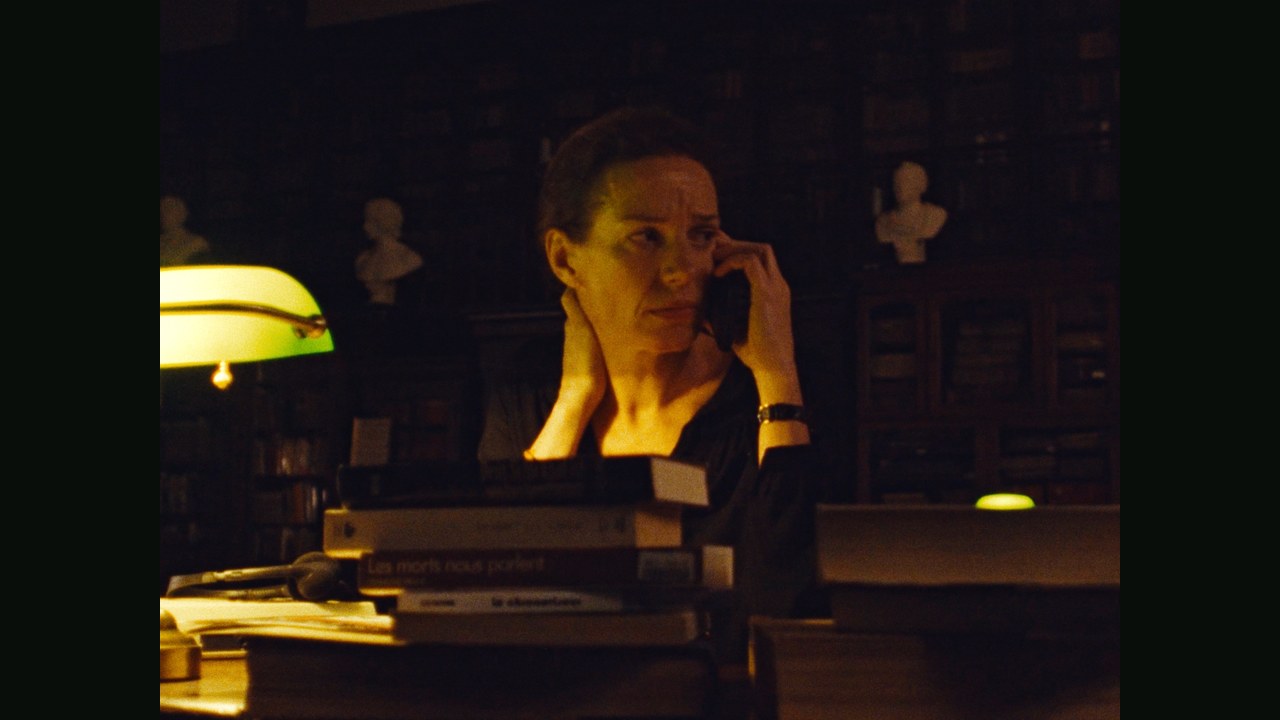
Chronovisor opened in U.S. theaters September 4, 2026, via Grasshopper Film after a Rotterdam Bright Futures bow, and the public machines woke up loud for a ninety-nine-minute academic occult mystery. Rotten Tomatoes prints a 93 percent Tomatometer on a sample of about fifteen critics at publication. Metacritic prints an 89 Metascore labeled Universal Acclaim on ten critic reviews, all positive in the distribution I can see. Popcornmeter and user scores are still basically empty. I am grading the public sheet, not inventing a multiplex miracle for a film that wants libraries more than popcorn. Per metacritic.com.
What Chronovisor claims to be is not subtle, and that is part of the charm. Anne-Laure Sellier, a real behavioral sciences professor at HEC Paris, plays Béatrice Courte, a Columbia academic writing about historical theories of memory. She becomes obsessed with the allegedly true story of the Chronovisor, an occult device associated with the Italian priest Pellegrino Ernetti and the claim that it could reproduce visuals from any point in history on a screen, including the notorious Jesus photograph folklore. Jack Auen and Kevin Walker wrote, directed, and edited. Leo Zheng shot it. Jason Zuriff produced. Grasshopper Film distributes. Runtime lands near one hour thirty-nine.
A 93 with an empty audience score is not a contradiction. It is a critics' film that has not met its crowd yet.
What the critic stack keeps circling as load-bearing. Variety's Guy Lodge called it an eerie, fiendishly clever mystery for lovers of libraries and treated Auen and Walker as mischievous genre mixologists who earned a slow-growing cult. IndieWire's Wilson Chapman graded it A-minus and argued that watching someone read becomes compulsively watchable when the archival material is largely genuine and the film blurs fiction with documentary haze. RogerEbert.com's Juan Barquin gave three out of four and said the journey is too infectious to look away. The New York Times' Brandon Yu called the construction a unique little marvel that builds to an eerie climax beyond the books. Vulture praised the aesthetics of research as much as the headiness of the device. Slant Magazine's Brad Hanford gave three and a half out of four and said the film never loses its appreciation for fiction's pleasures. Those are beams. The squeaks already in the smaller sample include NYC Movie Guru calling it cerebral, stylish, and often lethargic, and Jared Mobarak's six out of ten warning that a cinematic dissertation will split champions from detractors.
I have not lived inside a private Grasshopper junket diary. I have lived inside the public sheet: limited theatrical September 4, Rotterdam premiere context from February 2026 coverage, IndieWire's research note that the directors spent nearly a year on the Chronovisor legend, closing-credit nods to Borges and Eco in Chapman's writeup, and an aggregator pair that currently agree the film is special while disagreeing about how wide that specialness travels. User cards are not ready, so I will not invent a crowd. Limited means you may need a city that still programs Grasshopper titles.
Caveats I will not invent away. I am not claiming Chronovisor is competing with Brand New Day's domestic haul or any other September carnival. Spoiler-light is the rule here because the pleasure is the rabbit hole, not a twist I would ruin for a word count.
Buy a ticket this weekend if you still believe movies can be about reading, researching, and getting ruined by a rumor, and the 93-plus-IndieWire-A-minus chorus sounds like enough insurance. Buy it if Eco and Borges are comfort food and you want a thriller that treats footnotes as plot. Wait for streaming if your city has no limited screen and you refuse a train for a ninety-nine-minute monograph. Do not pretend an empty Popcornmeter is a secret 90 from civilians. Pretend it is a critic darling that has not met the crowd yet.
Mayday already got its Apple theatrical-as-login habit. Onslaught and By Any Means already got their ticket cards earlier. Chronovisor is the occult academic that opened limited on September 4 and asked for less creature blood and more legal lamps over long tables. Some Sundays need a Upper East Side apartment that turns into a hidden library.
One more industrial note the Film Stage and Variety coverage keep whispering. Casting a real academic as the lead is a stunt that paid off twice: authenticity of posture, and a slightly out-of-joint screen presence that fits a character who prefers ideas to chemistry. Lodge noted the restaurant exchange that never blooms into personal romance.
Method honesty belongs in the grade. Chronovisor weaponizes text on screen, archival tapes, and the tactile boredom of research until the boredom flips into compulsion. Several notices say that flip is the movie. If you have ever lost a night to a Wikipedia hole about Vatican forensics, you already know the sensation. If you have not, the 93 may look like critic cosplay. Grasshopper stocked a rabbit hole with Universal Acclaim stickers and a thin audience card.
Runtime honesty belongs next to the method. Ninety-nine minutes is short for a thriller and long for a pure essay film. The notices that love it treat the length as a single sitting trance. The notices that cool on it treat dry stretches as the cost of the trance. Both can be true for different viewers in the same theater. Bring patience for pages. Bring hunger for dread that arrives through paper cuts and CRT glow instead of jump scares.
For the shelf argument people will have after the limited run: Chronovisor is not trying to be The Da Vinci Code with better fonts. Chapman said that out loud, and the Borges and Eco thanks in the credits agree. It is trying to be a debut that proves research can be suspense. The public machines say the debut worked. The public machines also say the sample is still small and the civilians have not voted. Between those facts sits the consumer decision: do you trust fifteen critics and ten Metacritic notices enough to leave the house for a monograph with a monster that might be a machine, or do you wait until the rabbit hole is a password. I am leaving the house.
Practical ticket notes, then I close the monograph. Grasshopper Film's page lists Chronovisor as a 2026 U.S. feature around the 100-minute mark with Sellier as the lead. Check local art-house listings rather than the multiplex app that only knows franchises. That is a Reviews sentence because it includes access as part of the grade.
I also want the limited-release honesty on the record without turning it into a sob story about exhibition. Grasshopper titles live or die on city calendars, campus series, and the handful of theaters that still trust a monograph with a CRT. That is not a failure of the 93. That is the exhibition map in 2026. The grade includes that friction because access is part of what you are buying when you leave the house for something that is not a franchise.
For readers who only meet movies through passwords, Chronovisor will eventually become a living-room product, and that may be where its cult actually grows. Lodge's slow-growing-cult sentence was not a slight. It was a diagnosis. Some films need the dark room first so the glow of the research screen feels earned. Some films need the pause button so you can rewind a footnote. Either path can be correct.
Should you see Chronovisor? A quick sorter
- Go if you have lost a night to a research rabbit hole, and Borges or Eco sound like comfort food.
- Go if you liked the idea of watching someone read becoming the suspense, which is the thing IndieWire and Variety both praised.
- Wait for streaming if your city has no limited screen; ninety nine minutes is not worth a long train for a casual viewer.
- Skip if you need set pieces. The minority reviews calling it lethargic are describing the same pace the fans call a trance.
My read on the numbers: fifteen and ten reviews are small samples. The agreement between the two aggregators matters more than either score.
More on Dorkify: Zendaya joins Alex Garland's A24 sci-fi film, The Exorcist: Martyrs trailer, cast, and 2027 date.
How we made this: researched and drafted with AI assistance. Sources are linked in the piece.
How we made this: researched and drafted with AI assistance. Sources are linked in the piece.
Original commentary based on public reporting. Not a reprint. Editorial standards.