
The Whisper Man did not need eight hours. It needed fathers who finally talk.
Netflix unlocks James Ashcroft's Alex North adaptation today. I have not screened it. Deadline, the Los Angeles Times, and Metacritic already argue the case: a 90s crime picture in a 2026 login, honest at roughly 111 minutes, haunted by men who go silent until a child is gone.

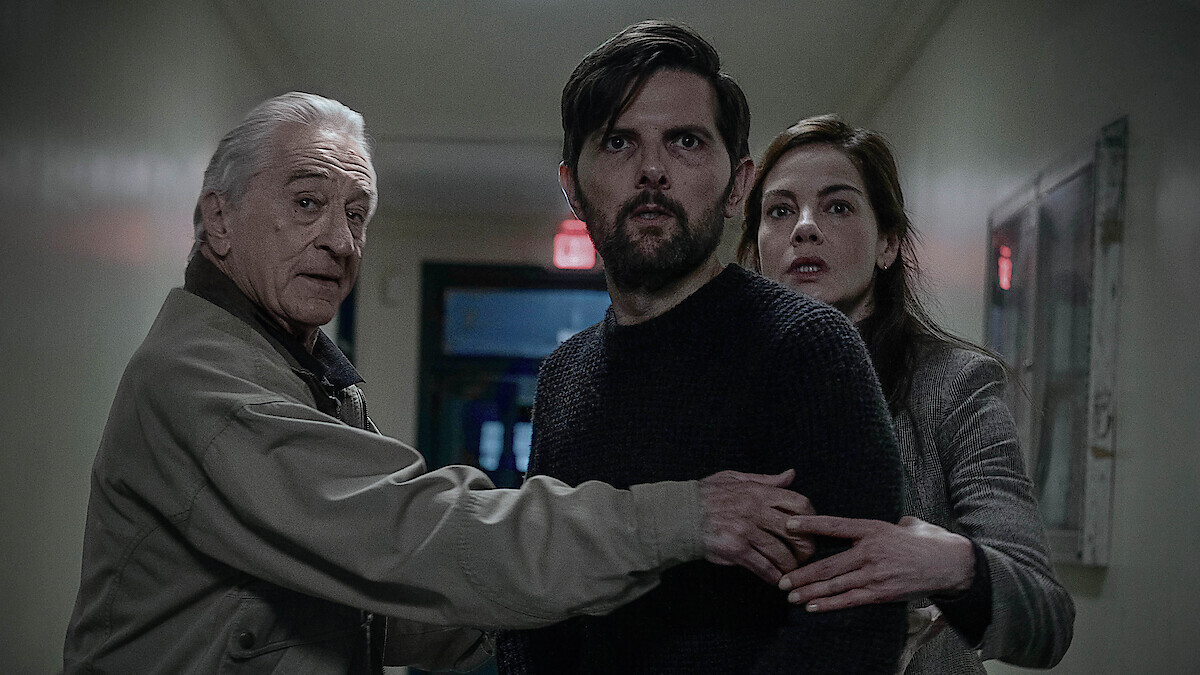
I have not screened The Whisper Man. Netflix unlocked it today, Friday, August 28, 2026, and the Reviews desk is not going to invent a living-room runtime log so I can sound like I sat through every jump scare. What I have is the public record: Pete Hammond's Deadline review from August 27, Mary McNamara's Los Angeles Times piece the same day, Metacritic's early scorecard, Wikipedia's production page, and Tudum's John DiLillo explainer that the movie is now streaming. That is enough to argue what this product is, and what it is not. It is not a limited series. It is a 90s crime picture wearing a 2026 login screen. Netflix stuffed the thing into roughly 111 minutes because that is the honest length of the story.
Listings already disagree by a few minutes, which is the kind of streaming-era trivia I refuse to flatten. Deadline clocks it at 1 hour 51 minutes. Wikipedia says 111 minutes. Tudum's title card lists 1h 54m. Call it under two hours either way. Hammond opens with the point that should be the marketing line: crime dramas about notorious serial killers usually arrive as limited series that drag things out to fill the longer form, and The Whisper Man does not need the extra time. It sails by as a movie at a pulsating pace. That sentence is the Reviews take before anyone starts arguing about Lecter DNA or Oscar-nominated prison cameos. Padding this plot into eight hours would have been a category error. The whisper is a rhyme. The real genre is fathers who cannot talk until a child is gone.
Netflix did not invent a new serial-killer franchise. It made a two-hour movie and left the bloat on the cutting-room floor.
The package itself is AGBO product with a Netflix stamp. James Ashcroft directs after The Rule of Jenny Pen in 2024 and Coming Home in the Dark. Ben Jacoby, of The First Omen, and Chase Palmer, of It, wrote the screenplay from Alex North's New York Times-bestselling novel. Tudum calls this Netflix's sixth partnership with AGBO. Producers named across Deadline and Wikipedia include Anthony Russo, Joe Russo, Angela Russo-Otstot, and Michael Disco, with Kassee Whiting and Marcus Viscidi also attached. Wikipedia lists a fifty-million-dollar budget; treat that as Wikipedia's figure, not a studio press release I audited. The rating is R. Photographer credit on the stills is David Lee for Netflix, per Tudum. That is the catalog page. The argument lives in how the reviews describe what that money bought.
Cast first, because the headline tax is real. Robert De Niro plays retired Det. Inspector Pete Willis, the cop who put the Whisper Man away. Adam Scott is Tom Kennedy, a widowed crime writer and broken dad whose eight-year-old son Jake, played by Acston Luca Porto, vanishes into the same Featherbank nightmare. Michelle Monaghan is Det. Amanda Beck, the working detective who drags Willis back toward a case that already wrecked his family. Hamish Linklater turns up as a zealous serial-killer memorabilia collector. Owen Teague and Will Brill, the latter as Sgt. John Dyson, round out the supporting police and town texture. John Carroll Lynch is in the ensemble per Wikipedia. Michael Keaton is Frank Carter, Francis "Frank" Carter, the imprisoned Whisper Man. Deadline still plays coy in the body copy about "a major uncredited Oscar-nominated star" in the prison scenes, then notes Deadline broke that casting months ago. The Los Angeles Times puts Keaton in the headline. The Wall Street Journal, via Metacritic's snippet, says when Keaton shows up the movie virtually levitates. That is not me grading a cameo I watched. That is three outlets agreeing the prison scenes are the voltage spike.
Plot stays spoiler-light on purpose. Featherbank had a Whisper Man who lured children with a seductive whisper at windows and sent tapes to police. Willis put Carter away. New disappearances arrive decades later. Beck visits retired Willis. Tom's son Jake vanishes. The family rupture is the engine: Tom has not spoken to Pete in years, and Jake never met his grandfather. Clues start to smell like Carter directing work from a cell. There is a prison visit. Hammond and McNamara both keep stressing that the serial-killer scaffolding is carrying a father-and-son story. Tudum prints the playground rhyme at the center of the campaign: if you leave a door half open, soon you will hear the whispers spoken; if your window is left unlatched, you will hear him tapping at the glass; if you are lonely, sad, and blue, the Whisper Man will come for you. That rhyme is the brand. It is also a decoy. The movie's actual subject, according to the people who filed early reviews, is men who lost the language for each other and only find it when a child is missing.
The whisper is a rhyme. The real genre is fathers who cannot talk until a child is gone.
Hammond's August 27 Deadline review is the barn-burner take. He hears Silence of the Lambs DNA, calls the picture occasionally pulpy and sometimes over the top, then lands on De Niro in fine form and Scott as sensational. De Niro underplays Willis, a man who can say it all without dialogue: years, regrets, walls, the toll. Scott is the tormented father who must reconnect with his estranged dad to save his son. Monaghan is ideally cast as the detective who cannot solve the puzzle alone. Porto is quite good as Jake. Linklater's murderabilia collector gets a specific shout. The uncredited prison star goes head to head with De Niro in classic cat-and-mouse. Hammond's structural verdict is the one I am stealing for this desk: better as a movie than as a padded limited series. That is not nostalgia for theatrical windows. That is a runtime ethic.
McNamara at the Los Angeles Times, also August 27, files it as a jump-scare thriller haunted by the ineffable ties between parent and child. She says North's 2019 novel had the title, the psycho, the urban-legend jingle, the endangered child, possible ghost energy, and family trauma, then notes the film adds a banging cast. In the race to replace the old TV-movie stigma with streaming films that could once have competed at the box office, she writes, The Whisper Man is as good as it gets. It does not reach the depth of Silence of the Lambs or The Sixth Sense, her named influences, but it is a twisty reminder of psychological adrenaline pictures like Kiss the Girls. She flags the U.K.-to-U.S. move, the New Jersey woodland open, Beck finding the wrong corpse in the trees, Tom and Jake starting over after a wife and mother lost to cancer, Jake's imaginary friend in the blue sweater, and Pete's old theory of an accomplice. Scott is on fire as the terrified, grieving, furious father. De Niro conveys volumes with a raised palm and a closed mouth. Family ties lift the movie out of typical serial-killer confines. She also names the creaks: a murderabilia subplot that strains credulity even while it comments on our fascination with grisly murders, and Monaghan given too little beyond determined-cop duty. Those limits belong on the page. A Reviews brief that only quotes the raves is a press release.
Metacritic sits at 64 out of 100 from ten critics, "generally favorable" on Wikipedia's summary of the same page. The critic cards visible in Metacritic snippets include the Los Angeles Times at 80, the Wall Street Journal at 70, and The Daily Beast at 50. I am not inventing a Rotten Tomatoes number I do not have. Sixty-four with a ten-critic sample is a weather report, not destiny. The spread already tells you the argument: family drama believers on one side, genre-device skeptics on the other, and Keaton as the consensus voltage when he enters. Variety's diverting-chiller framing, visible in the early search chatter around the same window, sits in that middle lane without needing me to overclaim a score I did not pull from a primary page today.
What Ashcroft and company appear to be selling, if you read the reviews instead of the trailer title cards, is economy as thesis. Limited series culture trained audiences to expect six episodes of procedural breadcrumb, a mid-season fake-out, and a finale that restates the theme in a monologue. Hammond says this adaptation refuses that drag. McNamara says the writers allude to the damaged father-son history rather than laying it out in big expositional monologues or flashbacks. That is craft talk for: trust the runtime. Tom does not want a reunion. He wants Willis to crack the case and save Jake. Willis wants to stay retired because the first Whisper Man case destroyed his family. Jake is the pressure that collapses the silence. The serial killer is the plot. The silence between Pete and Tom is the movie.
A limited series stretches a whisper into a season. A movie admits the whisper was always a rhyme about fathers.
I want the honesty rules loud before the comments invent a fake screening diary for Bart Christoff. I have not watched the prison scenes. I have not timed Colin Stetson's score, which Wikipedia lists, against Peter Deming's cinematography. I have not graded whether Linklater's collector subplot earns its flourish or merely winks at true-crime fandom. I have not verified every New Jersey location from the Plainfield shoot Wikipedia dates to spring 2025. What I can say from the public reviews is that the product Netflix is shipping today is arguing for the two-hour form in a year when the platform still loves to turn novels into calendars. AGBO and Netflix had the option to stretch North's book. They did not. Deadline's barn-burner language and the Times' family-ties lift both treat that choice as the feature, not the bug.
Recommendation, stated as a Friday Reviews desk verdict rather than a personal star rating I have not earned in a chair. Stream it tonight if you want a pulpy, Silence-adjacent crime picture that keeps insisting the scare is secondary to two men who lost each other. Stream it if you are tired of limited series that take four hours to reach the prison visit this movie apparently understands is the voltage. Stream it for Scott on fire and De Niro underplaying, which is the consensus praise across Deadline and the Times, and for Keaton's levitating entrance if you trust the Journal's curl-your-toes line. Skip it, or wait, if The Daily Beast's grab-bag-of-genre-devices shrug matches your patience for murderabilia side quests and Monaghan's thin assignment. Skip it if you needed eight episodes of Featherbank folklore instead of a rhyme and a clock. The honest length is the point.
That is the Reviews argument for August 28. The Whisper Man hits Netflix as an R-rated, under-two-hours adaptation of a bestseller, directed by Ashcroft, written by Jacoby and Palmer, produced under the Russo AGBO banner, headlined by De Niro, Scott, Monaghan, and Keaton. Hammond calls it a barn-burner better suited to a movie than a padded series. McNamara calls it a jump-scare thriller lifted by imperfect family ties. Metacritic's early 64 says the room is favorable without being unanimous. I have not sat with the whisper myself. I have read the length. The length is the story Netflix finally told without stretching it into a season, and today that is enough to file.
Quick compare
| Format temptation | What Whisper Man actually is | What to refuse |
|---|---|---|
| Limited series stretch | About 111 minutes of 90s crime grammar | Inventing a living-room runtime log without a screen |
| Prestige login padding | Fathers who go silent until a child is gone | Treating Metacritic's early 64 as a final sermon |
| Franchise sequel bait | A closed story Netflix did not season-ize | Confusing Tudum explainers with a grade you earned |
Our take: the length is the argument. Netflix told a crime picture without forcing an eight-hour whisper.
Related reading: What does a franchise-record open buy you.
Related reading: Top-rated game adap is still an opening-night bet.
How we made this: researched and drafted with AI assistance. Sources are linked in the piece.
Original commentary based on public reporting. Not a reprint. Editorial standards.