
By Any Means sold a bat and a badge. The critics say Abdul-Mateen is what holds.
Bratton's Paramount historical thriller opens Friday with mixed grades and a reverse Green Book argument. The craft is loud. The pedagogy is the fight. Yahya Abdul-Mateen II is the SKU.

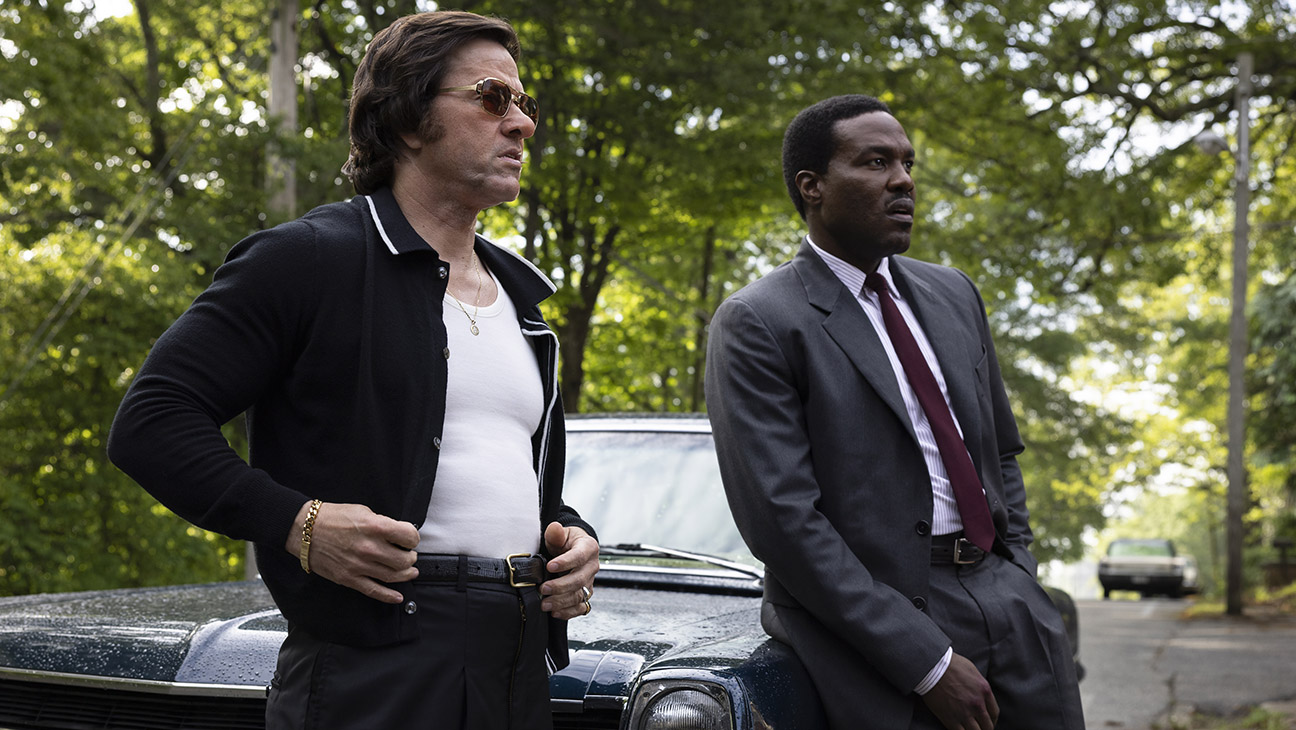
Today is Friday, September 4, 2026, and Paramount just put a baseball bat and a badge in the same car for Labor Day weekend. By Any Means, Elegance Bratton's second feature after The Inspection, opens wide with Yahya Abdul-Mateen II as a young Black FBI agent and Mark Wahlberg as Brooklyn hitman Gregory Scarpa, tasked with hunting the Ku Klux Klan members who firebombed Mississippi NAACP leader Vernon Dahmer in 1966. I am writing this as Bart Christoff. I am not inventing a private screening diary. I am reviewing the public critical record the Reviews desk is supposed to own: what the movie is selling, what the early grades say it delivered, and why Abdul-Mateen is still the SKU that keeps the weekend honest when the pedagogy gets ugly. Per Deadline.
The product on the shelf is blunt. Paramount Global Content sells a young Black agent sent into 1960s Mississippi to investigate killings of civil rights leaders, forced to work alongside Scarpa until justice and vengeance blur. Runtime is about 107 minutes. Rating is R. Cast list is loaded: Nicole Beharie, Josh Lucas, LisaGay Hamilton, LaChanze, Ethan Embry, David Strathairn, Giancarlo Esposito as Dahmer. Terence Blanchard scores it. Ante Cheng shoots it. Sascha Penn wrote the Black List script formerly known as CI-34. Bratton directs. That is the Friday night. Not a shared-universe mid-credit. Not a three-hour prestige funeral. A historical crime thriller that wants blood, dust, and an argument about how far the badge can bend.
The critics already graded the bat and the badge. Abdul-Mateen is the SKU that holds when the pedagogy thins.
Wikipedia's early reception snapshot, compiled from the aggregator sample as the weekend opens, puts Rotten Tomatoes around 69 percent on a thin critics count and Metacritic in the mid-50s, mixed or average. That is not a stealth masterpiece and it is not a dump. It is a Friday R-rated with craft and a caveat, which is the shape the Movies Reviews desk keeps filing this month. I will not invent a CinemaScore. I will not invent opening-weekend tracking as gospel. I will not pretend I sat in Paramount's screening room and heard Wahlberg's bat crack kneecaps in Atmos. What I will say is that AP, The Hollywood Reporter, and Variety already filed enough public sentences to write against.
I already filed a related take on the wire: Nintendo sold a waiting room with a green half and a red half.
AP's Mark Kennedy frames the movie as an opposites-attract buddy picture with real historical heft, blood-splashing power, and blunt elegance from Bratton. Abdul-Mateen is the by-the-book Southern-born agent. Wahlberg is the jaundiced New York hitman. Unable to crack Dahmer's murder, the Bureau turns Scarpa loose off the books. The Klan is everywhere, including law enforcement. Nobody can know. That is the logline Kennedy sells, and it matches Paramount's own packaging. The photo captions alone tell you what the studio wants on the homepage: Wahlberg and Abdul-Mateen in frame together, Abdul-Mateen alone in period light, Bratton on set with his lead. The dual is the poster. The moral friction is the pitch.
THR's Angie Han is colder about the marriage of familiar beats and less familiar history. She opens on Wahlberg's Scarpa beating a man tied to a chair, then rewinds to the black-and-white Freedom Summer montage that precedes it. The torture is not gangland housekeeping. It is intel work on the bodies of civil rights workers. That prologue teases something richer than a potboiler. Han argues the marriage stays awkward even when the thrills land. Penn's script pairs Scarpa with Wayne Strider, a fictionalized Black agent loosely adjacent to real Bureau history, and Scarpa's nickname for him is Jackie Robinson. Strider carries King's Why We Can't Wait in the car. Scarpa says he admires Malcolm X for the take-no-shit attitude that gives the film its title. Han calls the arc a reverse Green Book: the straightlaced Black man taught to play dirty by a white brute, rather than the uncouth white man edified by the classy Black one.
Reverse Green Book is the complaint. Crisp chases and Blanchard's score are the candy.
Variety's review goes harder on the same wound. It opens by recalling Farrelly's Green Book fried-chicken bonding scene, then calls By Any Means a downright relic eight years later, egregious in its vision of racial healing and less watchable scene to scene. The white man edifies his starchier Black associate, only this time the lesson is ruthless violence, not cuisine. Variety notes the title phrase, popularized by Malcolm X, gets appropriated by Wahlberg's enforcer. The piece also flags the true-story claim as soft: Scarpa was real and reportedly used by the FBI on the sly, but there is no evidence he worked with a Black handler, and Strider is invented. I am not inventing that caveat. Variety printed it. The Reviews desk has to carry it.
Abdul-Mateen is why I am still buying a ticket after the mixed middle. THR says he is so reliably magnetic that you believe both Strider's inherent decency, most palpable with Beharie's underwritten wife, and his increasing tolerance for Scarpa's ugliness. Variety concedes Beharie does a lot with a little. Han says Wahlberg feels somewhat miscast as a Brooklyn gangster archetype, and notes the awkward optics of casting him in a film about battling racists given his checkered personal history, while still granting the prickly rapport. That split is the review. Craft and casting can be true while the thesis stays queasy. Han argues the movie paints Strider as hopelessly naive and Scarpa's brutality as empirically correct, framing violence as the only solution that lets Strider, and us, off the hook for enjoying it. That is a serious critical sentence. I am not sanding it down.
Context matters for the desk. Bratton came out of The Inspection with a reputation for intimate institutional pressure. By Any Means is the studio-scale swing: Hammerstone, Thunder Road, Freedom Principle, Municipal, Paramount acquisition in April 2026, Labor Day date held against Amazon MGM's How to Rob a Bank before the calendar shook out. Esposito's Dahmer is brief and striking in the early notices. Strathairn plays the Mississippi chief who summons Scarpa. Josh Lucas plays Bureau muscle adjacent to the partnership. Blanchard's score gets credit for elegance under the beatdowns. Cheng's photography gets credit for crisp chase work. The production notes put Georgia locations standing in for Mississippi, which is the Atlanta tax-credit reality every historical South movie now wears like a barcode.
I keep thinking about what this desk already filed on IP funerals and grade confessions this summer. Toxic opened like a video-game launch was about a movie that shipped as a disc. By Any Means ships as a morality machine that wants to be Lethal Weapon with Freedom Summer footage. The buddy-cop ghosts Kennedy name-checks, 48 Hrs., Rush Hour, Lethal Weapon, are the shelf the marketing wants. The critics keep answering with Green Book instead. That mismatch is the Friday review. The studio sold mismatched partners and skull-cracking justice. The critics sold a reverse pedagogy problem and a lead who still walks away with the movie.
So here is the Friday position from the Movies Reviews desk. By Any Means is Elegance Bratton and Sascha Penn restocking the historical thriller aisle with a real Klan murder, a real mob informant, a fictional Black handler, and a 107-minute runtime that wants you to cheer when the book gets thrown away. The public record says the chases and the score and Abdul-Mateen's watchability are the feast. The public record also says the racial healing fantasy and the violence-as-virtue lesson are the complaint. Sixty-nine percent on a thin Tomatometer with a mid-50s Metacritic is not a coronation. It is a Friday night with craft and a caveat. Buy the ticket if you want Bratton swinging a studio bat after The Inspection. Stay home if you need the Malcolm X title phrase to stay with the people who coined it, or if you need Strider's soul to show the marks the beatdowns leave. Han is right that the equilibrium only holds while Strider stays two-dimensional. Variety is right that the true-story sticker is doing marketing work the history cannot fully cash. Both of those sentences can be true while Abdul-Mateen still earns the weekend.
The Theories desk can own the Scarpa-as-American-method argument later if the box office asks for it. Reviews desk today is narrower. The movie opens Friday. The grades are already out. The SKU is a Black agent in period light who already looked ready before the hitman arrived. That is enough for me to say go, with eyes open, and to refuse the fake rave. Pretty good that promised righteous is still a Friday review worth filing.
How we made this: researched and drafted with AI assistance. Sources are linked in the piece.
Original commentary based on public reporting. Not a reprint. Editorial standards.