
LEGO PlayStation rebuilds the grey console. Retro gets a brick altar.
Set 72306 recreates the original PlayStation and first controller in 1,911 pieces after State of Play, with functional buttons, a plug-in pad, and Gran Turismo plus Ape Escape dioramas inside the shell.

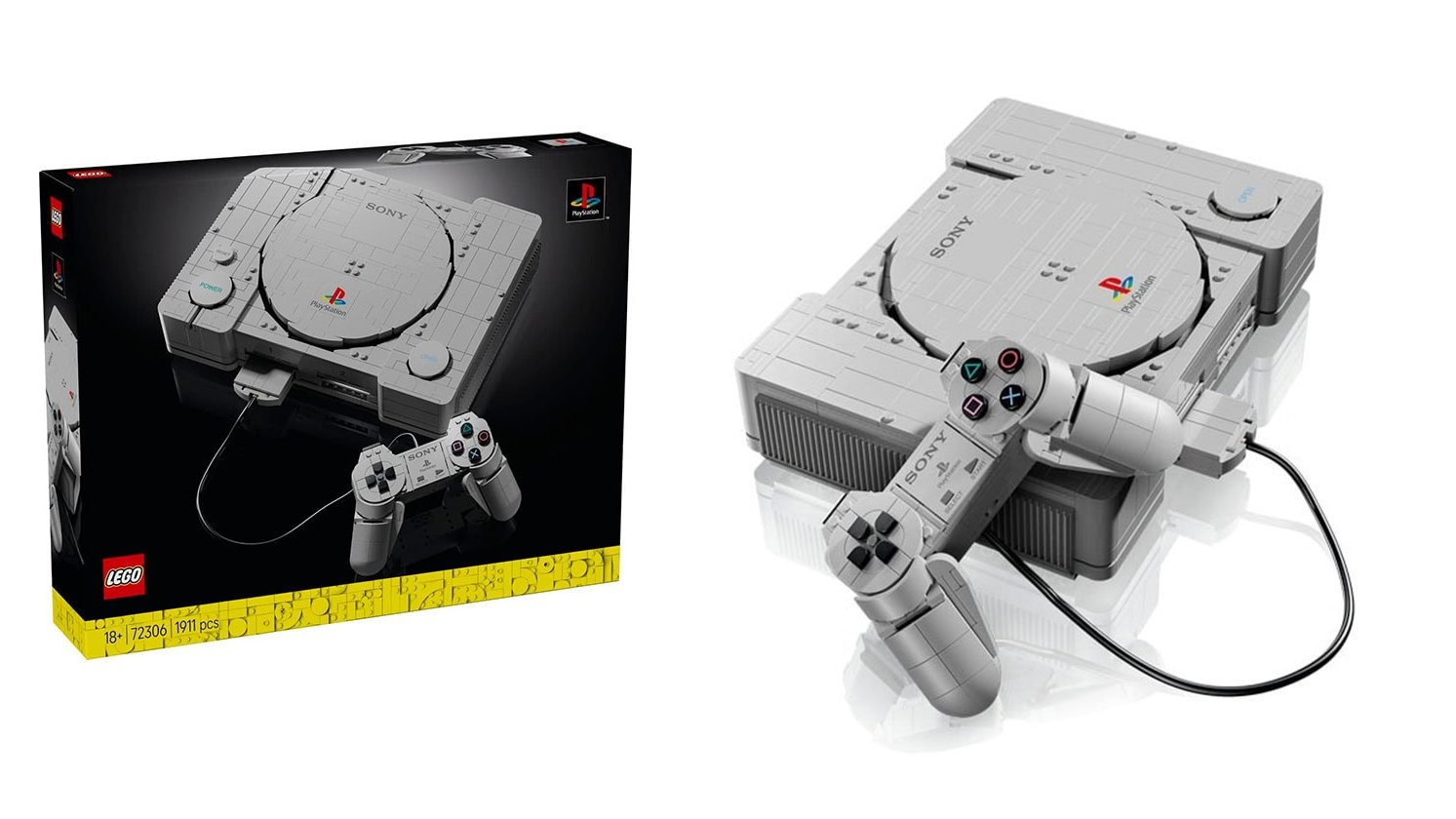
The grey console got a brick altar, and I am filing it on the Retro desk because this is about dead hardware ritual, not the Collectibles SKU spreadsheet. On September 3, 2026, the LEGO Group revealed the first-ever LEGO PlayStation set after PlayStation's State of Play. Set 72306 rebuilds the original PlayStation and its first controller in 1,911 pieces. Functional Open and Power buttons. A plug-in brick controller. Hidden dioramas for Gran Turismo and Ape Escape tucked inside the shell. That is the hardware fantasy with a stud count.
I already lived through the inventory funeral for this machine in they inventoried a dead PlayStation. This set is the opposite motion. Instead of cataloging a corpse, LEGO is asking adults to rebuild the altar and press Start again with their thumbs on ABS.
Dimensions matter when you are talking about a near 1:1 display piece. LEGO lists the console build at over 6 cm high, 26 cm wide, and 19 cm deep. Age rating is 18+. Street timing is LEGO Insiders early access on October 1, 2026, then general sale on October 4 at LEGO.com/PlayStation, LEGO Stores, and select retailers. Official pricing is $179.99 / £139.99 / €159.99. I am leaving the Collectibles desk to argue the rent math in its own filing. Retro's job is the ghost in the grey plastic.
Nineties boot rituals deserve an altar, even when the altar is ABS.
The controller plug-in is the sentence that sold me. Original PlayStation memory is not only Crash and Metal Gear. It is the physical grammar of a cable clicking into the front of a box that sounded like a disc drive clearing its throat. LEGO rebuilt that grammar. You press tactile Open and Power buttons. You hide game dioramas inside the shell or pull them out for shelf theater. Gran Turismo gets a mini track with tiny cars. Ape Escape gets a red or blue monkey helmet scene. Those two games are not random nostalgia stickers. 1997 and 1999 are the years when the living room learned racing simulation and analog mischief on the same grey slab.
State of Play as the reveal stage is corporate poetry I almost respect. Sony's broadcast is where modern hardware gets trailers. LEGO used that stage to resurrect the first living-room passport. The joke writes itself. The machine that taught a generation to wait through load screens now teaches adults to sort bags of grey and charcoal bricks for a weekend.
I keep a soft spot for display models that admit they are museums. This one does. It is not pretending to be a toy for a child who wants a light-up HUD. It is an adult shelf object that happens to contain two micro stages from the catalog that made the original PlayStation feel like a lifestyle, not a calculator. Lifestyle is a slippery word. Here it means the grey box sat under the TV like a second remote religion.
Compare that religion to the drawer altar fantasy we already argued when Sony's own furniture experiments blurred console and cabinet. I filed that itch in the PlayStation is an altar with drawers. LEGO's move is cleaner. No drawers. Just the silhouette, the controller, and the cheat code of opening the lid to find Gran Turismo and Ape Escape living like fossils in a reliquary.
Retro is not about beating the clock. It is about keeping the boot chime in your hands.
Will the set replace a real SCPH-1001 on a collector's shelf? No. Real hardware still smells like dust and old capacitors. Brick hardware smells like new ABS and adult money. Both can sit in the same room. One plays discs. The other plays memory. Memory is the Retro desk's actual currency.
What I want selfishly is the moment someone films the Power button click and the internet pretends it is firmware. What I expect is a month of Insiders refreshing October 1 like it is a midnight launch, then a secondary market argument about sealed boxes by Halloween. Secondary markets are not Retro theology. They are rent. Theology is the grey silhouette that still looks like 1995 even when every stud is dated 2026.
If you grew up blowing into cartridges while this console quietly ate CDs and changed the industry, the set is a peace offering. If you only know PlayStation as a blue light and a UI full of trophies, the set is a history pamphlet with a controller cable. Either way, the altar is on the calendar. October 1 for Insiders. October 4 for everyone else. Build the grey box. Hide the monkeys. Leave the win rates to Season 10. Tonight belongs to dead hardware that somehow got a second life in brick.
Adult LEGO has a tell when it respects the object. Functional buttons are that tell. Plenty of display sets give you a silhouette and call it nostalgia. Fewer sets rebuild the finger memory of pressing Power and Open like you are about to hear a laser-calibrated lens wake up. Finger memory is Retro gospel. Gospel is allowed to be a little embarrassing when you are forty and excited about a brick disc lid.
Gran Turismo inside the shell is the serious twin. Polyphony's first PlayStation landmark taught a generation that a console could host simulation pride without apologizing to arcade purity. Ape Escape is the mischievous twin. Analog stick as character control thesis. Monkey helmet as mascot chaos. Putting both dioramas in one grey reliquary is a thesis about the original PlayStation's range. Range is why the machine ate the living room. Range is why a brick altar feels earned instead of random IP laundry.
I keep thinking about the cable. Modern consoles hide ports like they are ashamed of physics. The original PlayStation wore its controller ports on its face like a handshake. LEGO rebuilding a plug-in controller is not a gimmick to me. It is the handshake preserved in studs. Handshakes matter when the rest of the industry keeps telling you everything should be wireless and invisible. Invisible is convenient. Invisible is also how objects stop feeling like objects.
October timing puts the set in the same seasonal aisle as every other adult gift panic. Insiders on October 1 will treat early access like a midnight launch because that is what Insiders culture does. General sale on October 4 will look calmer until a regional stockout teaches someone geography. Geography is part of Retro collecting too. The original console taught people import anxiety. The brick version will teach refresh anxiety. Different anxiety. Same nervous system.
If you already own a yellowed original shell, put the LEGO version on a different shelf. Let the real machine remain a machine. Let the brick machine remain a memorial. Memorials that try to replace the corpse get weird. Memorials that sit beside the corpse get honest. Honesty is the Retro desk's whole job on a Thursday when the news is a press release from Billund and a State of Play stage.
Final brick sermon. Dead hardware stays dead until someone rebuilds the ritual. LEGO rebuilt the ritual with 1,911 pieces and a controller cable made of ABS. I am not calling that salvation. I am calling it a good altar. Good altars do not need a Metacritic. They need a place under the light where the grey still looks like 1995, even when every bag is dated for 2026 adults who finally have the money and the shelf space to press Start again.
How we made this: researched and drafted with AI assistance. Sources are linked in the piece.
Original commentary based on public reporting. Not a reprint. Editorial standards.