
Shigeru Miyamoto gets the honor no game maker had before him
Shigeru Miyamoto is the first video game creator named to Japan's Order of Culture, with the medal presented November 3. His honors in order, the games behind the award, and why the rest of this year's list matters.

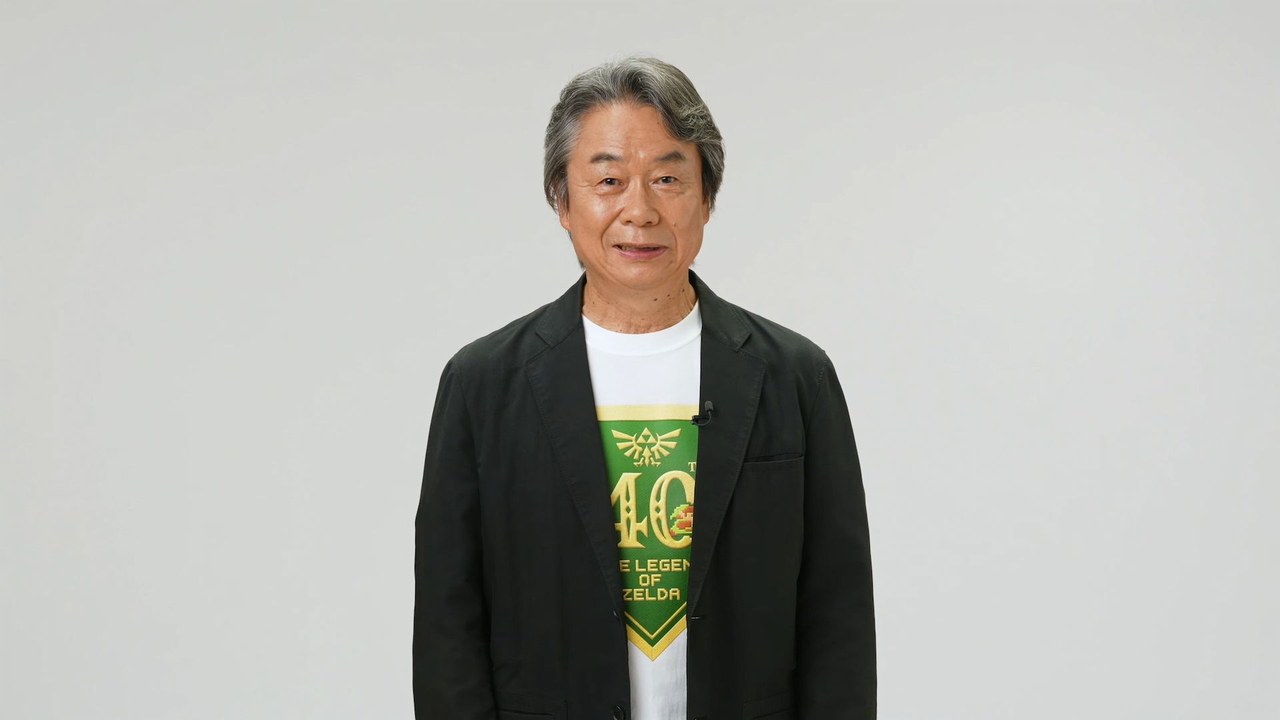
Shigeru Miyamoto is going to the Imperial Palace. Japan's government announced on Friday that the Nintendo creator of Mario and The Legend of Zelda will receive the 2026 Order of Culture, and Jiji Press, via Nippon.com, reports that he is the first person from the video game industry ever to get it. Emperor Naruhito presents the medal on November 3, Culture Day.
I have spent a lot of words on this site mourning dead hardware and forgotten ports. This one is the opposite. It is the moment a country that built half the medium officially files a game designer next to its novelists, painters and scientists. It took long enough.
What the honor actually is
The Order of Culture dates to 1937, as GamesRadar notes, and it goes to people who have made major contributions to Japanese art, literature, science and technology. The Japan Times says the education ministry made the announcement and describes the honor as one so far reserved for those fields. Miyamoto is 73.
Look at who else is on this year's list, because it says a lot about the company games are now keeping. Per Jiji, the eight recipients include lighting designer Motoko Ishii and Kenso Soai, a Tokyo University of Science professor emeritus who won this year's Nobel Prize in Chemistry. In the tier below, Person of Cultural Merit, the government picked 21 people, including jazz saxophonist Sadao Watanabe and the animation director Rintaro, known for films including Galaxy Express 999. So the same morning gave Japan's top cultural medal to the Donkey Kong guy and a cultural merit honor to an anime pioneer. I would frame that page.
The medal is going to one man. The list it lands on says the whole medium finally got invited in.
Miyamoto's honors and the dates around them
The Order of Culture is usually the top of a ladder, and Miyamoto has been climbing it for a while. Here is the run of honors and Nintendo dates that the coverage this week laid out, in order.
| When | What | Source |
|---|---|---|
| 1977 | Joins Nintendo as an entry-level employee | The Japan Times |
| 2012 | Prince of Asturias Award, Communications and Humanities (Spain) | Anime News Network |
| 2019 | Named a Person of Cultural Merit (Japan) | Anime News Network |
| October 23, 2026 | Named the first game-industry recipient of the Order of Culture | Jiji Press |
| November 3, 2026 | Order of Culture presented by the Emperor at the Imperial Palace | Jiji Press |
| November 5, 2026 | The Legend of Zelda: Ocarina of Time remake releases | The Japan Times, GamesRadar |
| April 30, 2027 | The Legend of Zelda live-action film, with Miyamoto producing | The Japan Times |
That middle stretch is a hell of a week for one man. He gets the medal on a Tuesday and the remake of the game many people call the best ever made hits shelves two days later. The film is the other half of that calendar, and our rundown of what Nintendo has confirmed about the Zelda movie is still the place to separate facts from rumor. Our Ocarina remake piece argued that November 5 is the real verdict on that project, not the review scores. Now the release lands with an imperial medal hanging over it. No pressure.
The quote that tells you who he is
Miyamoto took the news at a press conference at Nintendo in Kyoto, according to Anime News Network. GamesRadar, working from a GameWatch report translated by Automaton, quotes him saying the achievements "were not the work of one person, but the result of collaboration with many others," and that he accepts the honor on their behalf.
You can read that as polite modesty, and it is. It is also accurate, and I think it is the most useful thing he could have said. The Japan Times credits him as co-director on 1983's Mario Bros. and as producer, not director, on Ocarina of Time in 1998. The Mario films he produced were made by a full animation studio, not a man at a drawing desk. Miyamoto's real genius over the last few decades has been taste and direction, the ability to tell a room what is fun and what is not. An honor system built around individual masters does not have a great slot for that, so he made one by naming everyone else.
The games behind the medal
For anyone younger than the NES, here is the short list of Miyamoto work the announcement coverage leaned on, with the role each source gave him. This is the reading list I would hand someone who only knows him from the movies. If you still own the carts, the Analogue Super Nt+ is the kindest way to play his 16-bit era on a modern TV.
- Donkey Kong (1981, arcade). The debut of the character who became Mario, per The Japan Times.
- Mario Bros. (1983). Co-directed by Miyamoto, and credited by The Japan Times with helping Nintendo get a foothold in North America after the early 1980s crash.
- The Legend of Zelda (1986). Co-created and designed by Miyamoto, drawing on his childhood in rural Kyoto Prefecture.
- The Legend of Zelda: Ocarina of Time (1998). Produced by Miyamoto. The series' jump from top-down 2D to third-person 3D.
- Pikmin and Star Fox. Anime News Network lists both among the franchises where he was the main designer of the first games.
- The Super Mario Bros. Movie (2023) and The Super Mario Galaxy Movie (2026). Produced by Miyamoto. The Japan Times puts them at more than $1.3 billion and more than $1 billion worldwide.
If you want a toy-shelf footnote to all this, LEGO's switch to a plain Mario minifigure is a reminder of how far that 1981 sprite traveled. It went from a few dozen chunky pixels to a medal from the Emperor in 45 years.
Why this one matters past Nintendo
Every medium goes through the same phase. First it is a fad, then an industry, then, much later and usually after its founders have gone gray, it gets treated as culture. Film got there. Manga got there. Games have been knocking for decades, and Japan, of all places, had not opened the door at this level until Friday.
Miyamoto is the obvious first name, and I do not think anyone serious will argue with the pick. The interesting question is the second name. Japan has a long bench of game designers whose work shaped the medium, and now there is a precedent. I hope it does not take another 49 years of a career for the next one to get the call.
How we made this: researched and drafted with AI assistance. Sources are linked in the piece.
How we made this: researched and drafted with AI assistance. Sources are linked in the piece.
Original commentary based on public reporting. Not a reprint. Editorial standards.