
The novel was quiet. The Ridley machine is not. The grades argue the mismatch.
The Dog Stars sits at 39 percent on Rotten Tomatoes and 49 on Metacritic. This is the critic pile, not the Coyote box-office joke.

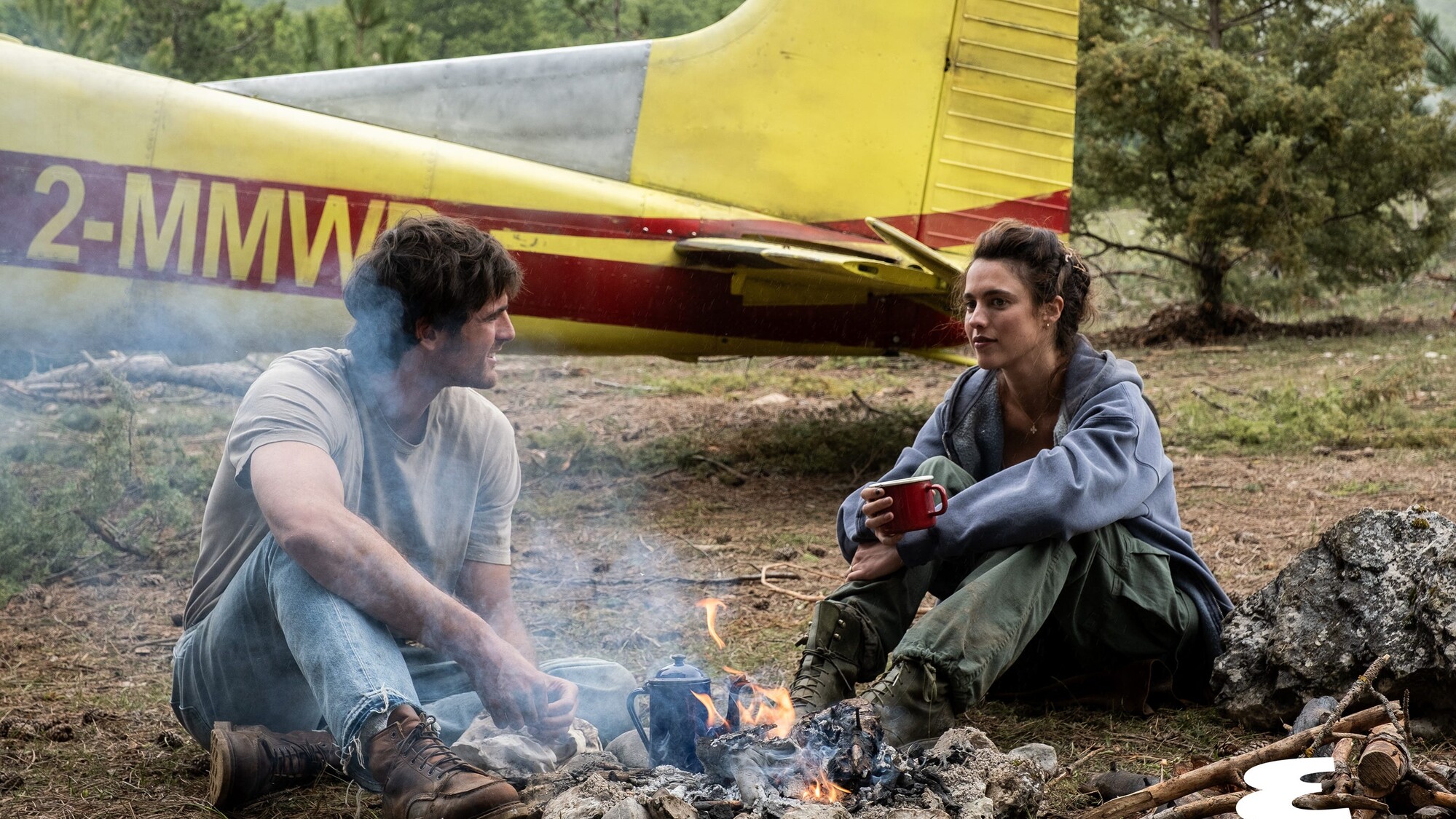
Peter Heller's 2012 novel The Dog Stars was a quiet book about a pilot, a dog, a neighbor with guns, and the thin hope that a radio voice might still be human. Ridley Scott's movie, out wide August 28, 2026 from 20th Century Studios, is not a quiet object. It is a late-summer machine with Jacob Elordi as Hig, Josh Brolin as Bangley, Margaret Qualley as Cima, Guy Pearce, Allison Janney, Benedict Wong, a yellow Cessna, and a Belgian Malinois named Jasper working overtime for the trailers. The Reviews job on September 1 is the critic pile, not the opening-weekend cartoon fight. I already filed the box-office version when a rescued cartoon outgrossed Ridley's dystopia. This piece is about whether the adaptation kept the book's hush or ran the Ridley factory through it until the hush left. Per deadline.com.
The public numbers, pulled this morning, are not kind. Rotten Tomatoes sits at 39 percent Tomatometer from 181 reviews, with a 71 percent Popcornmeter from 500-plus verified ratings. The critics consensus on the RT page reads: a derivative and drowsy tour through the post-apocalypse, The Dog Stars' lush visuals can't compensate for its listless narrative and underpowered pacing. Metacritic, per Wikipedia's August 29 retrieval note and the live Metacritic card, lands at 49 from 46 critics, mixed or average, with a user line around 5.2 from a thin early sample. CinemaScore, as logged on the film's Wikipedia page, is a C+. Runtime is 1 hour 58 minutes. Rating is R for strong violence and language. Distributor is 20th Century Studios. Screenplay is Mark L. Smith, adapting Heller, the same Smith who wrote Twisters and worked on The Revenant. That is the industrial sheet.
The novel was quiet. The Ridley machine is not. The grades are the mismatch made public.
What the critics keep agreeing on is the camera. David Rooney at The Hollywood Reporter calls Elordi's lead an introspective movie-star magnetism that evokes Kevin Costner's heyday, praises Brolin's humor and camouflaged decency, and still files the film as muted, unlikely to top anyone's Ridley rankings, appealingly mellow even when that seems antithetical to apocalypse marketing. Pete Hammond at Deadline, quoted in RT's first-reviews roundup, says Elordi shows genuine chops as a leading man. The same roundup harvests the counter-chorus: Giovanni Lago at Next Best Picture finds Elordi blander than expected; other notices call the performance a set of stoic stares. Praise for Qualley arrives repeatedly as unshowy and bruised. Praise for Pearce arrives as hostility that warms. The cast is not the failure mode. The failure mode is tempo and novelty.
Benjamin Lee at The Guardian, in an August 25, 2026 review headlined as a lethargic misfire, describes Hig living with Jasper and Bangley at a remote Colorado compound after a flu pandemic, scavenging, disagreeing about hope, until chaos lands. Lee argues Mark L. Smith's script details those differences too loudly, as if the characters were having the conversation for the first time for our benefit, and that the folksy charm never feels lived-in. Robert Daniels at RogerEbert.com goes harder, calling it the most tedious film of Scott's career, a boring wasteland where even sharpened set pieces (Brolin as a one-man death squad against tattooed marauders) lack punch because the gangs are bodies to pile rather than a consequential threat. Daniels clocks the Mennonite colony run by Aaron (Benedict Wong), the yellow Cessna runs to Denver for medicine, and the mourning visits to Hig's former home. He still finds no script engine under the ensemble.
That is the mismatch thesis in critic language. Heller's novel sold interior weather: grief, flight paths, the dog as continuity, the neighbor as necessary friction, the radio as a rumor of other people. Scott's film, by the notices, keeps the furniture and turns up the volume on perimeter defense, marauder choreography, and the odd-couple survivalist branding the studio featurettes already leaked. RT's Adam Nayman in The New Republic says that for a movie set in a wasteland, it is cluttered with plot points and symbolic gimmicks until it is not really about anything. Walter Chaw at Film Freak Central calls it sluggish and maniacally energetic at once, lugubrious and bombastic, beautifully shot and difficult to follow. Rebecca Onion at Slate, in the RT pull, says Scott and Smith took away what the story needed while trying to give audiences what they think we want. Those sentences are not box-office tweets. They are adaptation autopsies.
I am staying spoiler-light on purpose. Premise only: pandemic aftermath, pilot and dog, gun-neighbor, radio lure, a wider world that may still hold people worth finding. No third-act inventory. No landing coordinates. The Reviews argument does not need the map. It needs the grade's confession that quiet source material plus late-career Ridley often produces a handsome object that cannot sit still long enough to be the book.
Context the pile already filed. Esquire's April 15, 2026 first look quoted Scott saying there have been rather too many apocalyptic movies, that Blade Runner had no end to the grimness, and that he was pleased The Dog Stars came off with a strong feeling of hope. That is the director's intended product: hope as differentiator. The August critic stack is grading whether hope survived the runtime or got paved by set pieces. THR's Rooney lands closer to Scott's wish (mellow, soulful, ensemble-held). Ebert.com's Daniels and Guardian's Lee land in the opposite camp (tedium, loud differences, missing engine). A 39 percent Tomatometer with a 71 percent audience line is the classic split where the room liked the dog and the faces more than the structure. CinemaScore C+ is the opening-night shrug in letter form.
Commerce without inventing a spreadsheet. Wide release August 28, late summer, R-rated, nearly two hours, post-Gladiator II Ridley, Elordi in a major solo lead after del Toro and the rest of the 2020s ascent, Brolin reteam after American Gangster. Disney's 20th Century can bury a film in August and still spend on stills. The stills are gorgeous. The Reviews desk is not grading the stills. The Reviews desk is grading whether gorgeous stills plus a Cessna plus a very good dog equal a movie that remembers why Heller's sentences were short.
Hope is easy to announce in an Esquire first look. Hope is hard to protect across 118 minutes of Ridley hardware.
Compare the confession to what adaptation usually buys. Quiet novels either get small (A24 hush, limited release) or get industrially enlarged until the hush is a trailer lie. The Dog Stars took the second door. Mark L. Smith's Twisters muscles are visible in the way notices describe action spikes. Scott's Blade Runner and Alien ghosts are visible in the marketing's promise of world-after. Heller's dog and plane are still on the poster because they have to be. The grades say the poster ingredients did not reassemble into the book's weather.
Recommendation, as a Tuesday desk reading the pile rather than a fake second screening. See it if you collect late Ridley and want Elordi and Brolin in a hangar, and if Rooney's mellow watch language sounds like enough. See it for Jasper if you are honest about why you bought the ticket. Skip it if you loved the novel for its silence and you already distrust post-apocalypse features that keep inventing marauder choreography. Skip it if Daniels' tedious verdict and the 39 percent consensus sound like the mismatch you feared in April when the first looks were all golden-hour grief. The cartoon box-office joke was last week's Features story. This week's Reviews story is simpler. The book whispered. The machine cleared its throat for two hours. The critics heard the throat.
One more industrial note the pile keeps whispering. First-look coverage in April sold golden-hour grief and Scott's hope thesis. By late August the same images were being re-used under review headlines about tedium. That recycling is not the photographers' fault. It is what happens when a studio's beauty assets outrun the script's weather. Fabio Lovino and the Esquire stills unit did their jobs. Mark L. Smith's pages, by the colder notices, did not give Scott enough quiet to protect. When a 39 percent Tomatometer shares a homepage with lush key art, the Reviews desk reads the gap as the product. Pretty apocalypse is easy to shoot. Quiet apocalypse is hard to dramatize for a wide August audience that expects Bangley to clear a yard.
I will also not pretend audience warmth is meaningless. A 71 percent Popcornmeter against a 39 percent critic line usually means the dog worked, the leads photographed as a couple of survivors worth following, and the weekend crowd graded vibes over structure. That split does not overturn the adaptation mismatch. It explains why the film can feel like a hangout to civilians and a misfire to people who carried Heller's sentences in their heads for fourteen years. Both responses can be true. Reviews is paid to say which one the public critic machine chose. On September 1, the machine chose drowsy.
September 1 tally. The Dog Stars, Ridley Scott, Mark L. Smith adapting Peter Heller, Jacob Elordi, Josh Brolin, Margaret Qualley, in theaters since August 28, 2026, R, 1h58m, 20th Century. RT 39 percent from 181 with a drowsy-derivative consensus. Metacritic 49 from 46. CinemaScore C+. Audience warmer than critics. Guardian: lethargic misfire. RogerEbert.com: most tedious of Scott's career. THR: muted, appealingly mellow, strong ensemble. Esquire first look sold hope. The notices argue the hope got processed. The novel was quiet. The Ridley machine is not. The public grades already argue the mismatch.
Related reading: They sold a DMZ panic as a Wednesday ticket. The 77 is the Neon weather report..
How we made this: researched and drafted with AI assistance. Sources are linked in the piece.
Original commentary based on public reporting. Not a reprint. Editorial standards.