
VisionQuest is the last expensive limited-series carton on the Marvel shelf.
Collider and Ben Fritz say the prestige Disney+ era ends after the October 14 VisionQuest drop. Born Again is the exception, not the sequel blueprint.

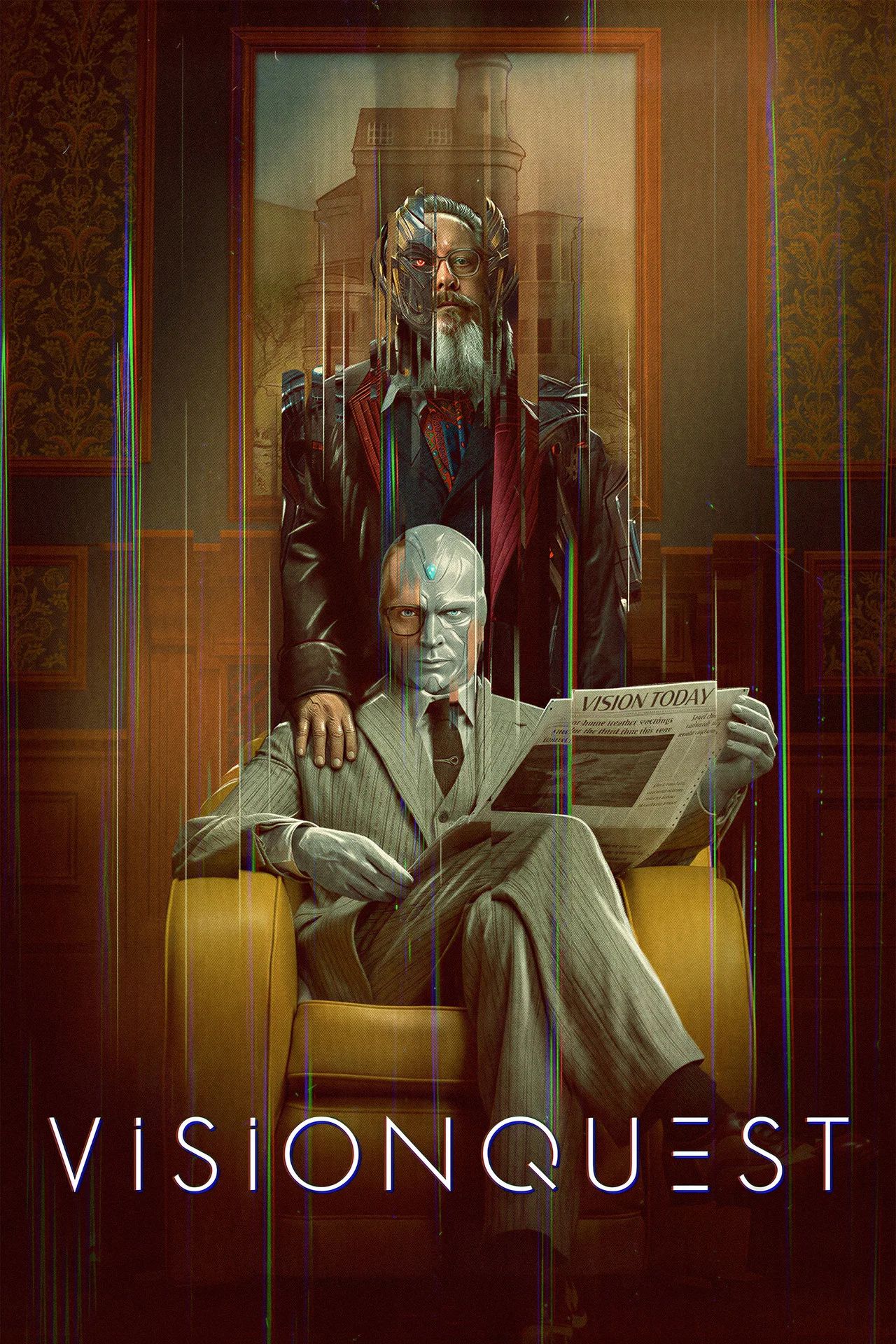
Today is Sunday, September 6, 2026, and the Marvel television aisle finally put a sell-by stamp on the expensive carton. VisionQuest premieres on Disney+ on October 14. Paul Bettany. Terry Matalas. The WandaVision trilogy closer that Marvel has been marketing as the third chapter after Agatha All Along. Collider reported that after VisionQuest, Marvel Studios is cutting back on live-action Disney+ shows. Wall Street Journal reporter Ben Fritz put the blunt version on the record: the era of prestige and expensive Marvel limited series is over after VisionQuest. That is not fan rumor weather. That is product news with a date on the flap.
I am filing this as an announcement, not as a review of a show that has not aired. The announcement is the carton itself. For six years of the Multiverse Saga, Marvel treated streaming like a second theatrical lane: big names, film-adjacent budgets, VFX that ate the calendar, and storylines that pretended every living room episode was required viewing before the next multiplex stamp. WandaVision taught the industry how to sell that promise. Loki, Falcon and the Winter Soldier, Hawkeye, Moon Knight, She-Hulk, Ms. Marvel, Secret Invasion, Agatha, Wonder Man. The stack got tall. The invoices got taller. VisionQuest is being positioned as the last expensive limited series built in that old grammar.
VisionQuest is the last expensive limited-series carton on the Marvel shelf.
Collider's exclusive from Adam Blevins is careful about exceptions, which is how grown-up reporting should sound. Returning series like Daredevil: Born Again are not being thrown off the building. Born Again already wrapped another season of filming. Potential Marvel Presents and Marvel Spotlight miniseries may still exist as banners. Animation still has a home. Special Presentations still look cheaper than eight episodes of synthezoid existentialism. The thing that is ending is the specific SKU: the prestige limited drop with movie stars, movie VFX, and movie connective tissue sold as appointment television for a streaming login.
Fritz's follow-on line matters as much as the obituary. He said Marvel would like to find a new live-action show with multiple season potential that is not closely tied to the movies and does not cost too much. Read that twice. Multi-season. Looser movie tether. Lower price. That is the opposite of what WandaVision sold in 2021. WandaVision sold you a film-level event that happened to live on Disney+. The new shopping list sells you a show that can renew without needing an Avengers trailer to justify the receipt.
I already filed Waldron put Rich Rider back on the wire when this aisle started arguing with itself. The callback still holds.
If you want the earlier shelf note, start with VisionQuest soft-ends the Multiverse Saga TV experiment. I am not restating that whole fight today.
Related wire, same obsession: Xandar was killed in an edit. Read it if the franchise already lives in your cart.
October 14 sits on a mean calendar. Spider-Man: Brand New Day already smashed the theatrical till this summer. Avengers: Doomsday opens December 18. Kevin Feige has said there will not be another Marvel movie between Doomsday and Secret Wars, which is a quality over quantity speech aimed at the multiplex. VisionQuest is the streaming punctuation mark between those two theatrical storms. Marvel is asking you to watch Vision ask what makes a person human while Ultron hangs around as the world's worst therapist, then walk into a December Avengers movie without another Disney+ homework assignment waiting in the queue. That is merchandising honesty, even if it arrives dressed as strategy.
I care about honesty on cartons. For years the prestige limited series was a soft lie that meant we might renew if the graph smiled. Marvel marketed one and done stories that still felt like they were auditioning for sequel seasons and film cameos. Wonder Man got the ugly version of that experiment: awards chatter, then a renewal posture that flipped into cancellation weather. The Acolyte and Willow, on the wider Disney+ map Collider cited, took the same one-season exit. The grand experiment language was never subtle. Disney wanted HBO and Netflix prestige shelf space. Some of those experiments paid for themselves in cultural heat. Some of them paid for themselves in memes and then vanished. VisionQuest is being sold as the last commission of the old expensive class.
A sell-by stamp on prestige is still a product announcement.
Brad Winderbaum remains the executive whose name keeps showing up when Marvel talks streaming, animation, and now broader franchise development. Collider noted his promotion earlier this year. The reporting does not claim Marvel is abandoning television. It claims Marvel is changing the shape of the television it is willing to fund at film-adjacent prices. Shape is the beat. Shape is what a Sunday wire should file when the trailer stills are already circulating and the premiere date is already public.
Look at what VisionQuest is asking for as packaging. Bettany returns as Vision, rebooted and hiding, consulting the AI voices in his own code: F.R.I.D.A.Y., E.D.I.T.H., J.A.R.V.I.S., Ultron. James Spader is back. A bounty puts Vision on the run with Thomas Shepard, a boy who may be tangled up in Vision's family mythology. Marvel's own D23 language sold that synopsis in August. Eight episodes. Christopher J. Byrne, Gandja Monteiro, Vincenzo Natali, and Matalas among the directors. That is a prestige carton with a trilogy stamp on the spine. It is also, if Collider and Fritz are right, the last time Marvel plans to build a new limited series that looks like that invoice.
San Diego Comic-Con already telegraphed the pivot for anyone watching the empty chairs. Feige's presentation leaned hard into Doomsday, Ghost Rider, Black Panther 3. Live-action TV was not the centerpiece. Collider flagged how loud that silence was for a studio that used to drop Disney+ calendars like confetti. D23 still gave VisionQuest its trailer and poster. Trailer weather is not a slate. A trailer for the last expensive limited series is a farewell tour with better lighting.
What this announcement is not: a claim that Born Again is doomed, that animation is dead, that no Marvel face will ever appear on Disney+ again, or that VisionQuest will flop before it airs. I have not seen VisionQuest. Neither have you, unless you are lying on a forum. What this announcement is: Marvel and Disney signaling that the Multiverse Saga habit of treating every limited series like a theatrical event is ending after this October drop. The next live-action bets, if Fritz's framing holds, want renewability and restraint more than they want another six-episode VFX war.
Living-room practicalities. VisionQuest arrives October 14, 2026, on Disney+. Watch the official trailer if you want the glitch aesthetic and the Ultron banter. Put the date next to Doomsday on the dry-erase board if you still build months around Marvel event weather. Then notice what is missing from the board after that: the old promise that another expensive limited series is already greenlit to feed the next film. The missing promise is the story.
I have filed a lot of Marvel television as product over the last half decade. Some of it was electric. Some of it was homework. All of it trained audiences to treat Disney+ like a second MCU syllabus. Ending that syllabus after VisionQuest is a real shift even if Marvel softens the language into cutting back instead of shutting the door. Cutting back is how studios say goodbye to a SKU without admitting the warehouse is full.
So here is the Sunday stamp. Collider says live-action Disney+ shows get cut back after VisionQuest, with Born Again and smaller banners as exceptions. Ben Fritz says the prestige expensive limited series era ends with VisionQuest, and the wish list afterward is multi-season, less movie-tethered, less costly. Marvel's own calendar puts VisionQuest on October 14 and Doomsday on December 18. That is the aisle. That is the carton. VisionQuest is the last expensive limited-series carton on the Marvel shelf, and for once the shelf talkers are saying the quiet part with attribution.
If you are a Born Again lifer, do not confuse this filing with a funeral for street-level Marvel. If you are a Vision lifer, enjoy the October appointment while it is still being sold like an event. If you are a spreadsheet person, this is the week the prestige TV experiment got a public end date. The wire's job is naming the product shape. The product shape just changed.
One more aisle note for the collectors of calendar stickers. October 14 is a Wednesday Disney+ drop in a year when Marvel would rather you save December for Doomsday. That sequencing is not an accident. It is a studio telling you which screen still owns the phase finale energy. Streaming gets the synthezoid epilogue. Theaters get the Avengers collision. If you have been waiting for Marvel to admit those are different products with different invoices, this is the admission wearing a premiere date.
I will watch VisionQuest as a customer who liked WandaVision more than I liked the homework culture that followed it. That is a bias I am willing to print. Bias does not change the reporting. The reporting says the expensive limited series era is being retired after this carton ships. Retirements deserve Sunday filings even when the retiree still has a terrific arm.
How we made this: researched and drafted with AI assistance. Sources are linked in the piece.
Original commentary based on public reporting. Not a reprint. Editorial standards.